Japan – Day 2, Surprisingly nice in Winter

Japan-Day-2-0151.jpg
Bedroom, Breakfast room, Dinner Room, Lounge room all in one

Waking up several times through the night due to a lack of familiarity with sleeping on a futon was a little bit of a nuisance but the room in Sekitei was lovely although, I could not see outside or let any fresh air in.. Sleeping on a futon was however novel, it’s like when you’re sleeping over at a friend’s house as a kid and you sleep on the floor. All those memories of fun times come straight to mind, and shifting the room around to allow you to have a sleeping area is something quite different akin to camping. Well, we liked it, maybe you won’t, but either way the rooms are fitting with paper windows and a paper sliding door to hide your shoes. Our only troubles that we experienced were that the hot water controller can get a little too talkative for my liking and you end up in a vicious circle when you press a button and it communicates with you loudly, pressing another button in response just generate more chatter. Had it not have been for my wife I may have ended up in a vicious circle where I could never stop pressing the buttons on the controller……

A word of caution however. In my travels I (Tim) normally find that places which aren’t Brisbane in Australia seem to not cause me allergies. Through my years I seem to have developed a hay fever allergy to Brisbane and when I step out of the home town everything seems to calm down. This was not the case with Japan or at least the hotel we stayed in. I suspect that the cause of my hay fever in the morning was due to the thatched flooring. I find straw and hay bales can give me trouble and sleeping on a nicely thatched hay bail for a floor is no exception. So if you do have a susceptibility to allergies from hay or straws and you do intend to sleep in a Ryokan or a more traditional hotel make sure you come armed with some antihistamines.

Japan-Day-1-0156.jpg
Trimming the trees in the city to make them beautiful. We were impressed!

Departing from the hotel in the morning was a breeze and the new lady at the reception was helpful and had very good English. We couldn’t really pick much to fault with this hotel, obviously set your expectations correctly (small room, making your own bed etc.) and you’ll have a good evening. I can’t hold my allergies against them, that’s my problem and it’s just something I thought I’d put forward for others to consider. Our backpacks aren’t terribly light and lugging them around while we walked through Shinjuku would not have been a good plan. Instead we chose to put them in lockers at the train station. The large size lockers cost 600 Yen and hold two backpacks at a pinch. If you’re using the lockers behind the gates like we did, don’t forget to get your passports for Jr pass exchange before you lock up. We were concerned that there wouldn’t be any spare large lockers available outside the gates but that wasn’t the case. There’s no real trick to using them, put the correct amount of money in follow the extremely loud prompts from the machine (if it’s automated), keep your sheet of paper with your pin on it and retrieve your stuff when you need too. The coin operated lockers give you a key to keep and when you unlock it the key is then locked so you can’t accidentally take it.

Our next stop was to exchange the JR rail passes. We had chosen not to exchange at Narita airport for two reasons, firstly it is extremely busy, there was a cue about 100m long and much stamping happening, and we were in Japan for 15 days so we needed to either miss one day at the end or the beginning of our journey. Given that it was late and we’d have to wait several hours (it was already 7pm and the JR exchange closes at 8pm) we chose the buy tickets on the JR n’ex and skip the lines, this was a modest ~3000Yen / ~40AUD and we figured we’d exchange in the morning. However our experience in Shinjuku was slow even though while popular it’s not the main international airport. Therefore if doing an exchange outside of Narita still budget an hour or else you’ll be disappointed. The lots of stamping and talking still happens where ever you go (even though the attendants are amazingly fast at pressing buttons and checking each letter in your passport) so it takes quite some time for each person to get through.

Japan-Day-2-8323.jpgWe then set out to find ourselves some breakfast and then head for the holy five story camera store. Again, locating a breakfast was not as straight forward as hoped. It seems that the Japanese style breakfast isn’t immediately easy to come by, actually we have no idea what a Japanese style breakfast is, sometimes it doesn’t help not actually doing your homework. So what we did notice is that some places are open and have people in them, and others don’t. This lead us to another machine operated restaurant called Ringerhut, this may sound like Pizzahut, Wikipedia indicates that the naming origins are from the Ringer family of Nagasaki and hut possibly from Pizzahut, so you might be close but the place is anything but Pizzahut. Think of a button operated machine to select your meal, take a seat anywhere at any free stool along any bench, give the waiter/ waitress your ticket from the robot, receive a glass of green tea/ water/ cold not tasty stuff that might be tea and wait a few minutes for your meal to be handed to you on a tray. For us looking for anything that looked breakfast like, we ended up settling on dumplings, miso and rice from the robot in the front of the place, service was quick and the food was tasty. Yes you’re probably right in thinking that’s not terribly Japanese but we had settled on hungry and the simplest path to satisfaction. The net result was tasty and satisfied, can’t complain with that!
Japan-Day-2-8332.jpg
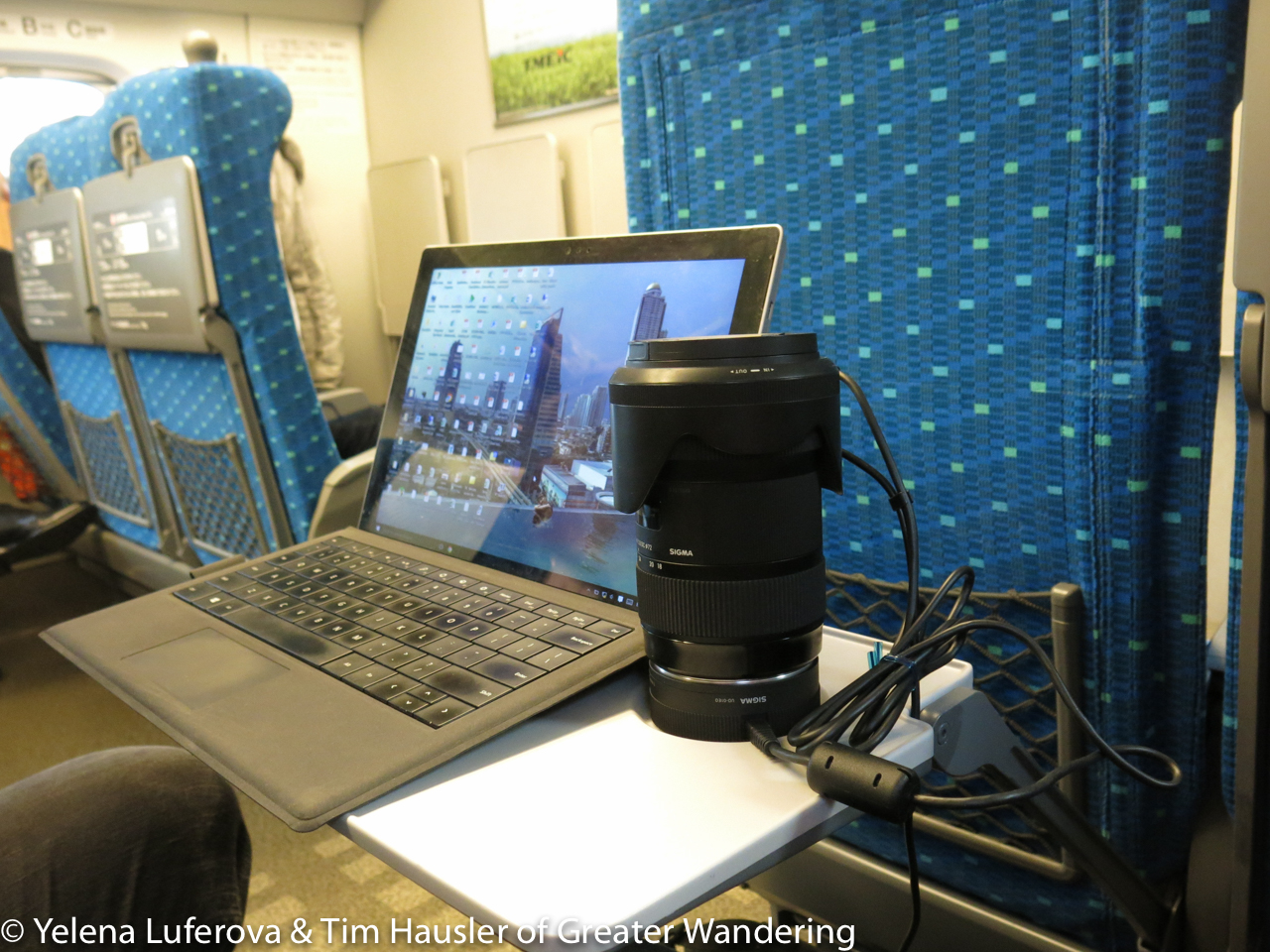
The best fun on the Shinkansen is had playing with a USB dock for a lens…

We then went off in search of a USB dock for the SIGMA 18-35mm lens which I had bought during the year, which is excellent except that it refuses to focus on anything. The USB dock is for re-calibrating the lens and correcting for front or back focusing, which until this year we had no knowledge of.  Anyhow it took a little wandering to track Yodabashi’s camera section down as Yodabashi is a massive multi-level store full of electronics and some cameras, but the camera Mecca is actually next door here (google street view link). As everyone says, if you like cameras you’ll like this place, we had to leave as if we spent more time there impulse buys would begin to happen. The only sad thing however was now that we’d bought some handy tools we wouldn’t be able to play with them until later.


As we then had a few hours to spend around Shinjuku before heading for Hiroshima we went wandering through the business district in search of the Sompo Japan Nipponkoa Museum. This wasn’t entirely well signed but the museum was on the 42 floor of the Sompo Japan Nipponkoa Insurance building. Entry was 500 Yen and to our surprised the museum has an absolutely fantastic view of Shinjuku. As we entered the building we noticed a Sunflowers by Van Gogh, we had no idea that this version of the painting resided in Tokyo. The Seiji Togo exhibition was excellent and the surprise bonus of the Van Gogh and the view of Shinjuku mad that couple hours extremely worthwhile.
Japan-Day-2-0163.jpg

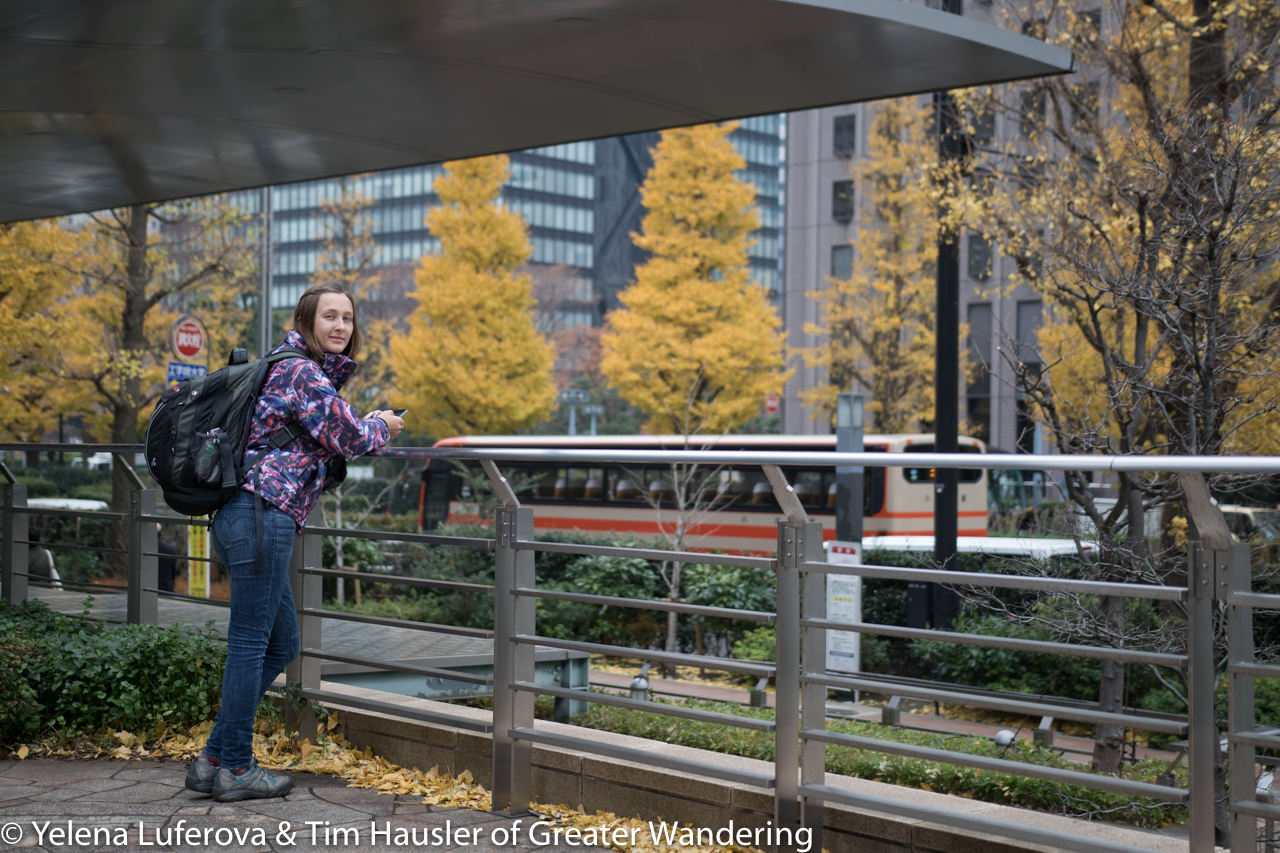
We then attempted to make our way to the Pentax square which according to our 2007 lonely planet guide was a good place to see some old Pentax camera gear turned out to not be there, or at least we couldn’t find it and after traipsing around for an hour in an attempt to locate it we decided to give the opportunity away. One thing we did notice in that time hunting around was that Tokyo’s business area is very clean and while a little stark beautiful in it’s own way, possibly the strangest thing is how quite the area is, aside from a little traffic noise. The attention to detail that the Japanese council goes to ensuring that their area is beautiful is quite extreme, we took a few photos of the tree beautification team in action tidying up the Autumn foliage on the Ginko trees.
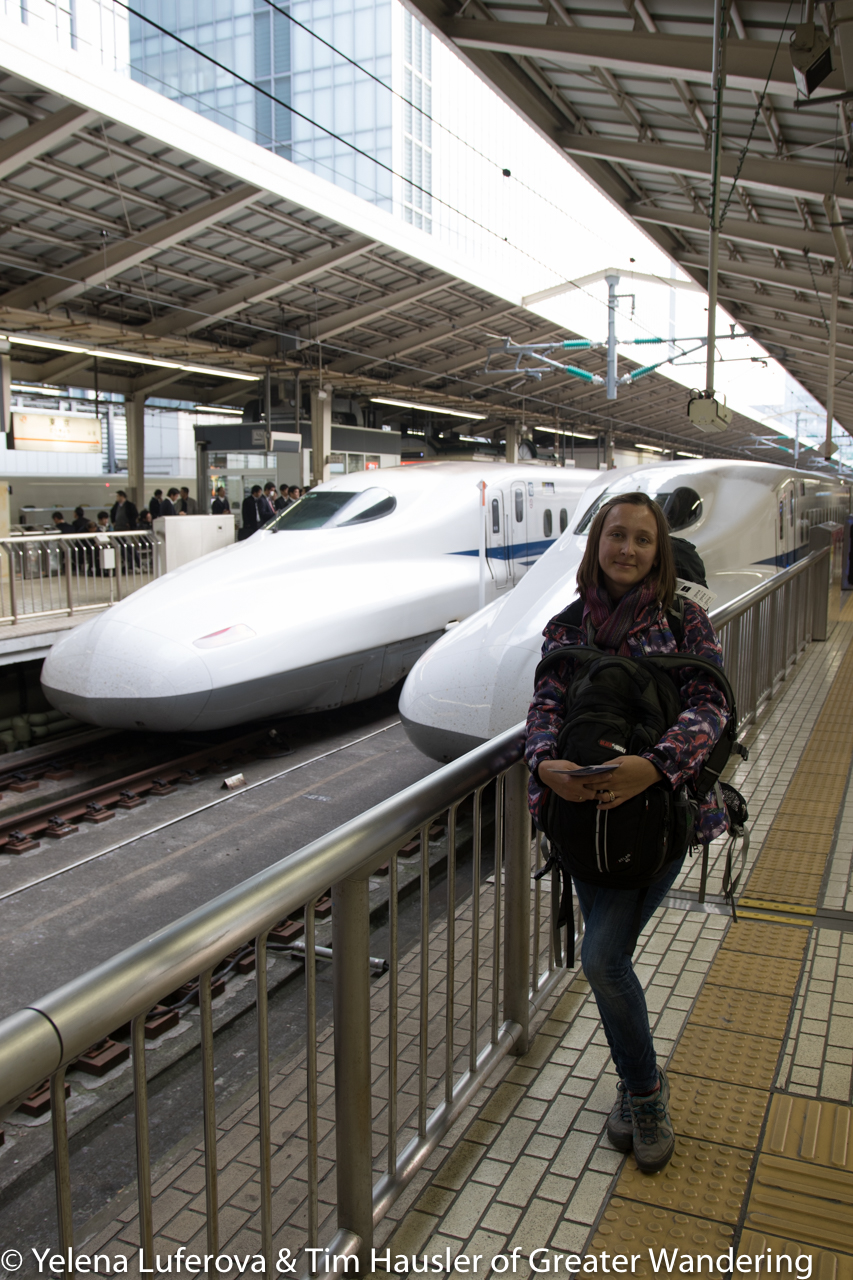
Japan-Day-2-0184.jpgThat left us fairly time poor at that point and we headed for Shinjuku station then Tokyo station, then the lovely Shinkansen. The Shinkansen are fantastic trains, if only all countries of the world had a service like this, and not only a service like it but a rail pass specially for visitors. As we’d reserved our tickets all we had to do was head for the correct carriage and sit down and start playing with camera lenses, well at least one of us.


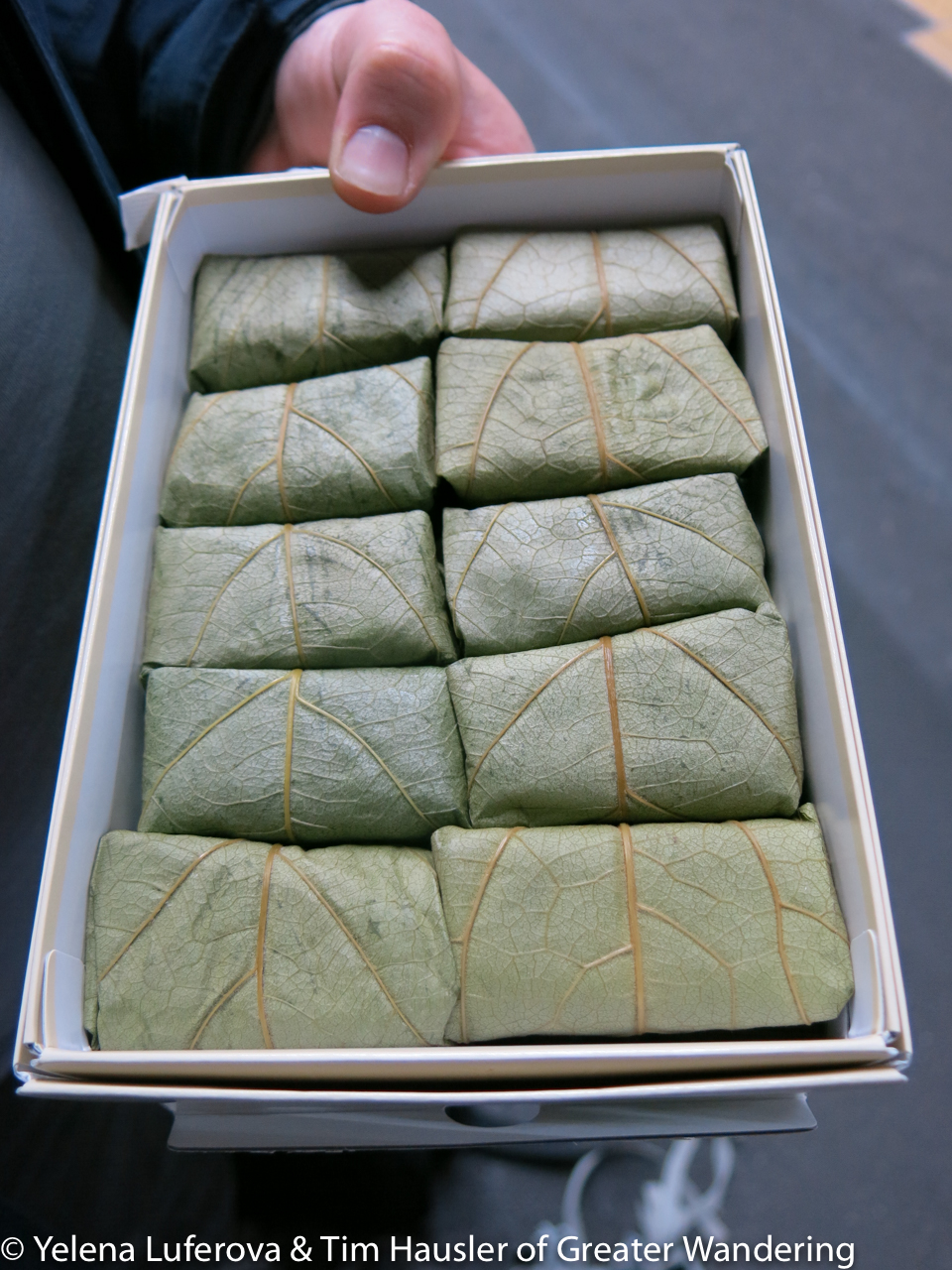
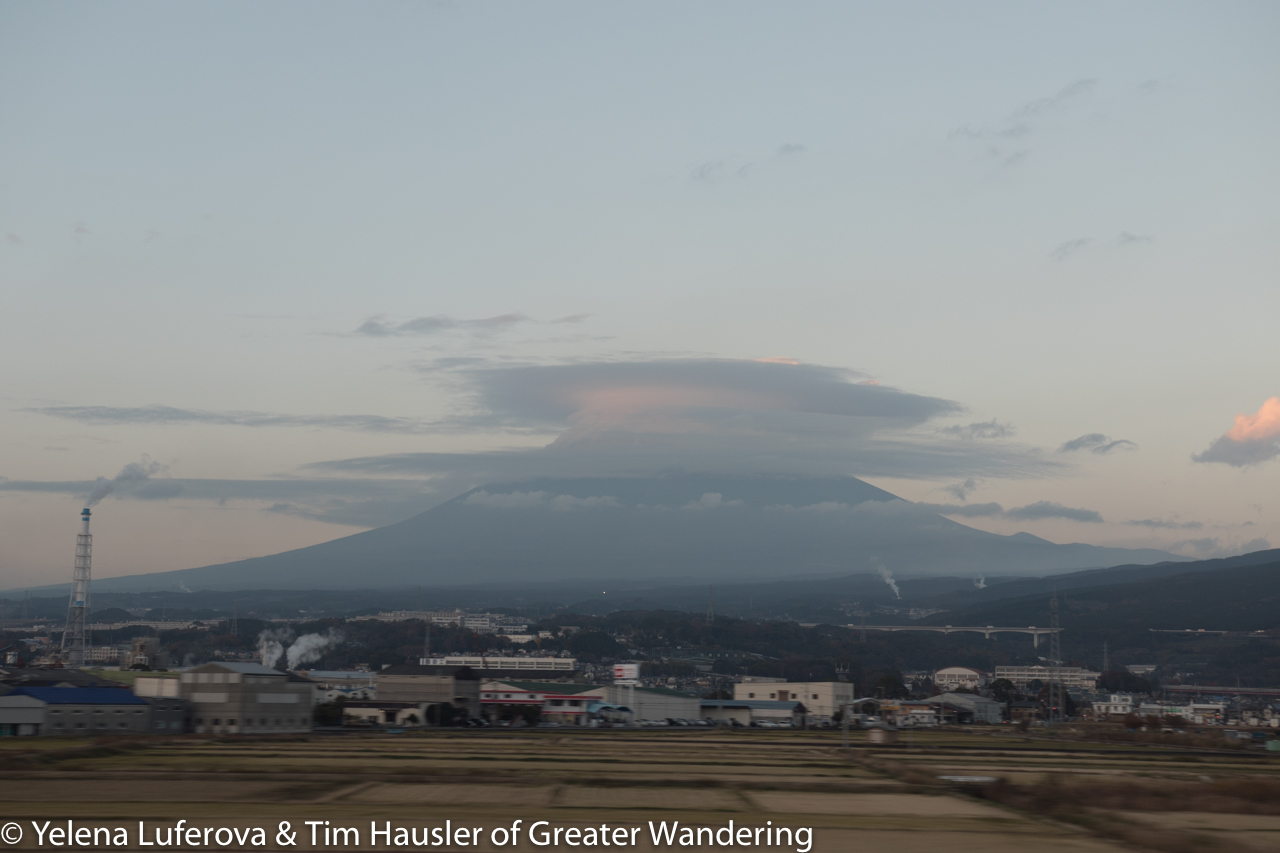
Fast forward an hour into your journey and so long as you reserve seats on the right hand side of the Shinkansen you’ll get to see mount Fuji. Fast forward 157 minutes you’ll be at Shin-Osaka eating some sushi wrapped in persimmon leaves, fast forward 2 minutes you’ll have people looking at your strangely as you’re eating the sushi (Kakinoha) with the persimmon leaves instead of unwrapping them (no one told us….) 90 minutes later you’ll be in Hiroshima.
Japan-Day-2-0192.jpg
Mt Fuji not at its best but apparently that’s what it’s like most of the time.

We then donned the backpacks and went for the short ~maybe 1 km at best walk to K’s House hostel. Yes we like hostels, they’re cheap, fun and normally tidy if you book the private doubles like we do.

Dinner was at a small yakatori place nearby, when we refer to small in Australia you’d be talking maybe a 20 or 30 person restaurant. In Japan you might be talking 7 people (in an L-shaped table around a few grills) plus your chef who stands in front of you preparing ingredients and dishing out the cooked yakatori as soon as it’s off the grill. We thought that this was just great. Luckily/ strangely (maybe it’s normal) we seem for the last few places to end up in restaurants which have no foreigners, this is re-assuring as often when you travel it’s fairly clear that only foreigners go to where you’re currently eating. This might be something unique to Japan that the locals actually go to the same places that hostels/ hotels/ accommodation suggest to the foreigners. After a handful of beers, highballs and yakatori we headed back to the hostel for a cup of tea and then bed, this turned into a handful more beers, discussion about refugees and a long night….


What a day


The Plan for Japan

Japan-Planning-0323.jpgWell, speaking of planning holidays. We just made it back from Zambia and had decided it’d be great to have a couple of beers with some of our friends from Brisbane who we hadn’t seen for a while. It was an exciting time, going out and purchasing something other than Mosi or Simba, the ability to buy wine which wasn’t topped up with a bit of grape juice by the lovely Shoprite staff, choice of a couple or restaurants, goodness, madness. Well anyhow’s 20 minutes after our friends met at our place and after we had absorbed the alcohol out of one or two of my beers, one of the friends announced that he was going to Japan skiing. We’ve been waiting for years for someone to mention skiing in Japan so we can seize the opportunity and invite ourselves. Unfortunately for him and his partner that left them doing only the nicest thing but calling our bluff by suggesting it would be great if we joined them. Typically drunk conversations like this are forgotten the next day, however this time we were serious and flights were booked, much to the surprise of even Lena.

Booking the flights was no drama so we checked prices and availability and then the real drama began, the accommodation. Maybe because we’ve travelled in many cheap places which have plenty of available hotels/ hostels/ somethings we don’t expect to find ourselves anything but spoilt for choice. This however was not the case for Nozawa Onsen, this place was booked out months ahead. It must be because it’s a special little place that only the snazzy people in the skiing niche know about. Refreshing Expedia didn’t yield much benefit and the only places left were some average looking Ryokans which both Lena and I had no idea about except that they looked small. A Ryokan (inn) for those who don’t know (which includes us) is a traditional Japanese style accommodation for travellers. This sounds quite nice really except when you get to the part about communal showers. This is just something that I haven’t quite grown up enough to accept, maybe it’s being Australian, maybe it’s being a simpleton, maybe I don’t care what it is because it just seems a bit strange. So that left us with a few hard choices, cheap, questionable accommodation or remaining in Australia for yet again another missed chance to go skiing in Japan. Thankfully however my friend came to Japan-Planning-0573.jpgthe party, while a little surprised that the drunken conversation wasn’t just that, he stepped up and called the hotel he was staying at in Nozawa Onsen, as he, being a Japanite understood that the hotel would respond far better that calling would yield better results than responding to emails/ online requests. Amazingly enough, after a call they rummaged up a spare room in two halves (so we’d have to change during our stay) and we were saved from the more cultural experience (I’m sure it’s healthy and good for you on a psychological level).

Flights to my surprise were cheapest through QANTAS, this was probably because we were going to break our trip into several segments Brisbane to Tokyo (Narita), Tokyo (Haneda) to Hong Kong (while not with QANTAS or covered in this section then Hong Kong to Almaty in Kazakhstan) then Hong Kong to Brisbane. Apparently this is three segment leg operated at some relatively high discount by QANTAS. So if you’re keen to see those three spots then it might be worthwhile having a look. However there is a catch which we found out – you can’t change a flight yourself in the QANTAS club/ frequent flier site unlike other return flights, this caused a little concern when we decided to extend our holiday a bit to make the most of being in Japan.

Our conclusion for our travel was that we would take roughly 5 days before skiing to spend some time in Tokyo (which we would return to after skiing), Hiroshima and Kyoto (possibly also Osaka, but as I’m writing this on the Shinkensen which is awesome  we have not quite decided yet). This is definitely quick, it would be nice to spend more time here but the reality is it’s not cheap as we paid through the nose for the Nozawa Onsen hotel, rail passes from JTB travel and a prepaid data sim from eConnect 3GB which we thought was enough data for two weeks. This meant that without even moving far we’d already set the holiday costs at about $3500AUD.

WJapan-Planning-0619.jpge decided against leaving bookings open on this trip and finding our way when we arrived. I always get the feeling that big places have a bigger opportunity of stepping into the wrong place when you don’t have a booking. Maybe next time….

We booked in Shinjuku at Shin Okubo Sekitei for the first night in Tokyo as we decided that trying to zip straight to Hiroshima on our first evening after a long flight might’ve been a bit ambitious. While the connections exist there is also not much margin for error. The QANTAS flights arrive at 18:00 at Narita, you would need to go straight to the JR exchange and get your real JR passes, then, with passes in hand you would need to organise and catch the next possible bullet train and prepare for a 5+ hour journey. When we did arrive at Tokyo Narita airport there was huge line at the JR exchange office and this would’ve taken at least an hour to clear (if not many hours), to get from the airport straight to you destination on the first night would need to be well organised. Unless you’re after an overnight slower train or something then going straight from Tokyo Narita airport to Hiroshima would be optimistic at best.

Our next destination was Hiroshima, K’s House for one night. This is a hostel, and we’re fans of booking private rooms in hostels. People are friendly there and you are pretty much guaranteed to bump into other travellers who might give you some ideas and inspiration. We only have a day in the city, but we both really wanted to do a little war tourism and we figured the Shinkensens could get us around quickly enough to make it alright.

Kyoto was next, and after much deliberation we decided to stay at the Capsule Ryokan for four nights. Ryokan you say, didn’t we just say we were cagey about them, you’re right but apparently this one has private toilets and bathrooms and it’s nice. We shall soon see….

Address at Nozawa Onsen for six nights. This was skiing and pre-ordained by friends who know much more than we do about Japan.

Mystays at Asakusa-bashi also pre-ordained by better people, but I’m sure we’d probably pick it if we were in the mood for some electricery at Akihabara.

That said, planning done.

We’ll cover the other tricky details for getting a VISA to Kazakhstan and hotel / ski accommodation booking in the Kazakhstan category. 

Japan-Planning-1689.jpg

Changing the timezone for BrewPi

I realised after about a year of using BrewPi that maybe I should attempt to fix the issue where the time on the graphs did not match the actual time. As I’m not a full sick brewer this really hadn’t annoyed me much in the past, now though, with a bit of spare time I managed to pluck up the courage to enter a search string into google and work out the solution. Note that this change will cause your currently trended temperature graph to change to the new timezone, so best do this while you’re chilling water like I did….

BrewPi is a Raspberry Pi based brewing controller which uses an Arduino board to control a fridge or freezer, which if you’re sensible would contain the fermenter for your beer. If I get around to it I’ll post some more detail on my setup including the wireless powerboard which saves me violating the stupid Australia laws regarding electricity in your house.

Now the details –

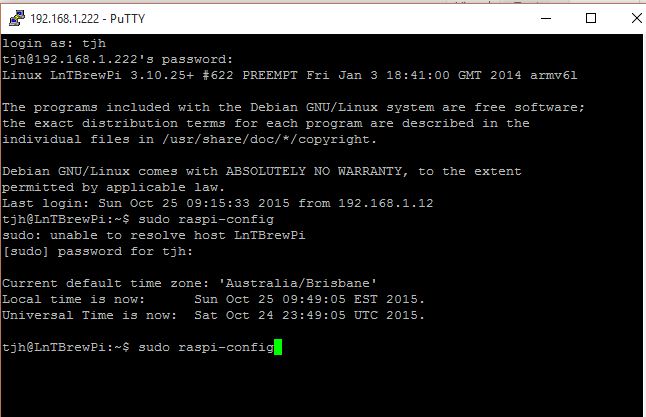
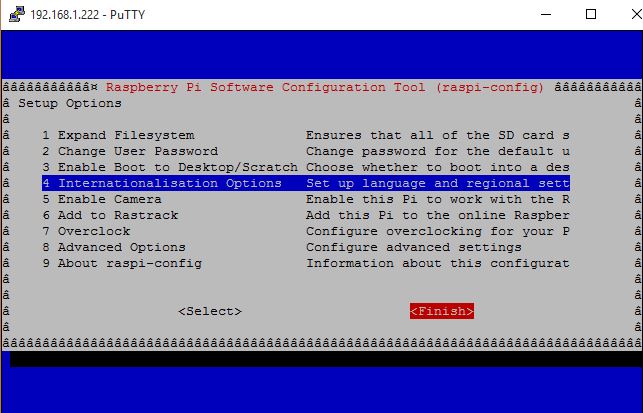
It’s complex type in “sudo raspi-config” select:

4) internationalisation options-

I2) Change Timzone

Select your country and then location (or closest location).

Reboot your BrewPi with “sudo reboot”.

Once rebooted your graph should match your actual timezone.

BrewPiTimezone

BrewPiInternationalisation


Tanzanian safari – Part 1: Tarangire NP

wpid216-5N7A9792.jpg
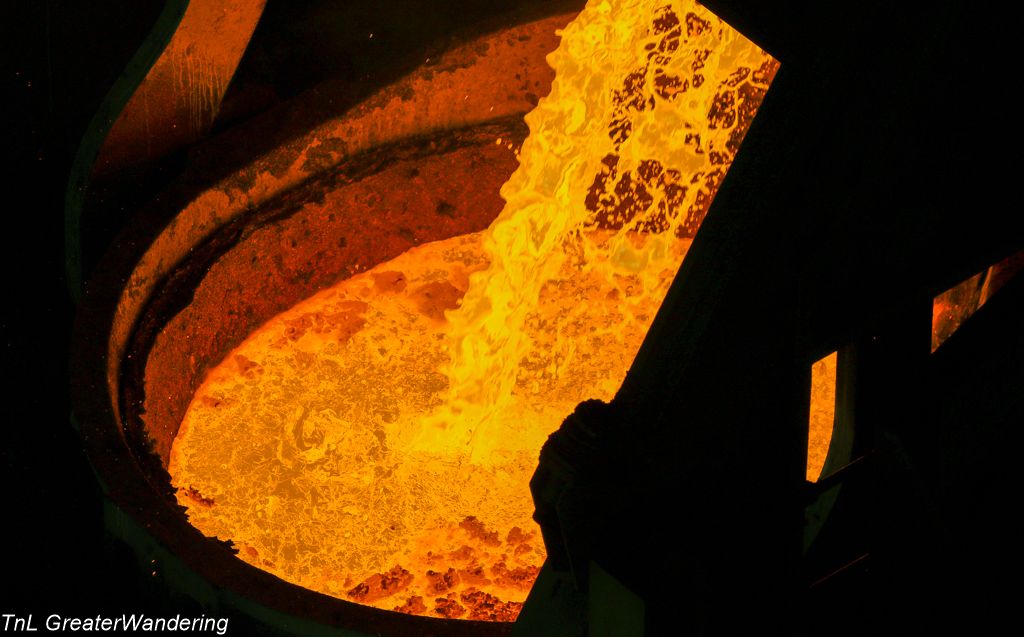
The churning pots of Erebor

Wake-up

After about eight months working solidly including the weekends, which was a bit soft as we didn’t include the nights, it was time for a brake. Lets not debate the issue however, some people definitely work harder than us, in fact some lawyers in Brisbane work more than 24 hours a day which seems to have set the new benchmark for long hours. We’d also spent an epic month or two planning which is something we don’t often do – you can read about that process here, riveting stuff!

The flight was early in the morning, if you’ve spent time with us, early is not our thing. The morning is best spent in bed relaxing, reading about terrorists, crime syndicates or pedophiles on the ABC news. Or if you’re a really special person you might just enjoy listening to the soft hustle of the wind, cool blue green glow in the windows as the sun reflects off the grass. I forgot, where were we, that’s right, being picked up by our bus master in his chariot the VW transporter at the horrid time of 6 am. For a change we didn’t even need to  nurse our bags as the mine had bought a trailer for the transporter. Quite great really. There was the usual ‘lekker’ chatter of the South Africans in the bus, whatever they talk about we have no idea and they’re oblivious to the idea that maybe we might want to know. Our bus trundled through Solwezi, dry, dusty and rarely quiet in the mornings, past our favourite Shoprite, past Whimpy’s which everyone covets so dearly but we’ve never ventured into. Past the teaming Solwezi markets full of people who’ve been our friends for such a long time even though we’ve only been there once or twice. Past the witch doctor large sign stating his cures for diseases such as,you guessed it, marriage. We then turn right after the markets and along a dusty pot holed road which I find a joy as you’ll rarely see much on a smooth flat road, because, well you’d be asleep. The town then gives way to a few plots of scraggly mealies and a few brick kilns, and then we’re at the Solwezi airport. We’re checked in via iPad and our friend from the charter knows us well so ID is not necessary, sure we’d only met seconds earlier but we have trustworthy faces. The plane we board is a Embraer Brasilia. It has silver engines and on hot days you can’t take your luggage onboard because it doesn’t provide enough lift, that is, unless your luggages is a massive flat screen TV.


We arrive in Lusaka on schedule and with no problem. Lusaka although has some problems of its own. Those being that due to a lack of rain and their enormous reliance on hydro power blackouts were frequent. This was all the talk of the local taxi drivers and most had come to the conclusion that it was a conspiracy theory about the water. From their point of view it was much more likely that simply the government was selling the power to neighbouring countries for cheap and leaving only a little for the locals. Who would know, but luckily our hotel had a backup generator so we weren’t in the dark literally or metaphorically. Our parents had managed to make there way across for the safari as well, planes still work. They arrived, breathed in the fresh air of Zambia and settled in for a brief journey in Lusaka.


wpid209-5N7A0199.jpg
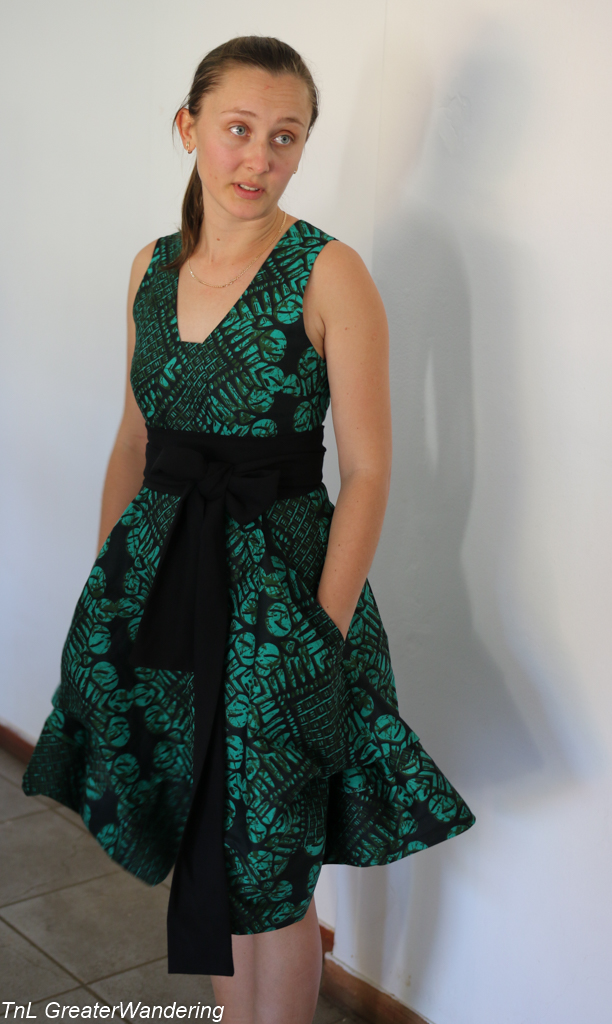
Lovely dresses from Kamanga Wear (a little outfit making local but modern clothes)

Spending a little time sightseeing in Lusaka is not too bad for a day, maybe you could make a few days of it but we are just not adventurous enough, maybe one day when we grow up. However what we did manage to do was go around to our few tourist spots we know, which are the National museum, and, err, a few shops. The National museum had a little more of the history of Zambia completed this time. Previously the section was only empty display cabinets and taped off. Now however it was filled with a few trinkets and colour posters. The museum has quite a few other exhibits which are worth seeing, some human history and the tribal history of Zambia, you could spend about an hour or more if you read everything in detail.  The day offered little more and our parents were weary so we finished the afternoon off picking up some clothes made by Kamanga wear made from chitenge, and then ended the night off at an Indian restaurant …. in the dark due to a power cut across Lusaka.

The next day was our departure so we shuffled off to the airport from Lusaka two hours or so before our flight. As in the typical African style we were issued our tickets and only noticed after we cleared customs and were sitting around that we were on the wrong flight. So I walked back out of the customs zone and the immigration staff waived me back out (this is a bit unusual for an Australian where doing something like this might land you in the strip search cabin). I asked why we had our flights changed. Apparently not enough people had been bothered to buy tickets on our flight so it was cancelled (or maybe it wasn’t and we were just cancelled). This meant that we’d be getting into Arusha at very late not just late, it also meant missing out on a view of Mt Kilimanjaro, shame but that’s life. Anyhows after that was sorted out as successfully as I could, which meant accepting the situation as fact and moving on, I walked back straight through customs waiving to the immigration staff – I figure they trusted I was honest enough to move back through the customs zone without another stamp or even a glance at my passport. That then left us with quite a few more hours to kill in Lusaka International which, while a little dull at least allowed us access to outrageously priced cold Mosi (The best Zambian beer).

Nairobi offered us a Tusker in the airport while waiting. This was probably good as it gave us a little time to calm Lena’s nerves as she was soon going to finally show me how she could clear customs in a flash and some poxy Australians would be left eating the dust of a Kazakhstani. However arriving in a Arusha an hour or so later proved to have the Australians through first and the Kazakhstani double and triple questioned, there is little justice in the world.

We were picked up in our luxury van, err, well, that’s what I was hoping but actually instead at 2am we were picked up in a completely stuffed van that only just managed to get us to the Planet Lodge in Arusha. We weren’t feeling terribly confident at that point as we’d handed over a considerable amount of cash for the holiday and stepping into a quite broken minivan was unexpected. However, we did make it and the hotel while a little odd was quite nice. The rooms were clean and the bed was relatively comfortable, but since we only managed to lie down at 3am we didn’t have long to enjoy the moment. Oasis hotel is a small semi boutique hotel which has a number of small circular rooms. The circles are divided into two such that you sleep in a small semi-circle. The rooms appeared to be clean and, if you’re patient, hot water eventually comes out of the shower head. Breakfast was quite nice and there were a few cute birds fluttering about in the grounds.

We were then met by our driver Michael, who was quite a nice guy and his vehicle of preference was a slightly old Landcruiser 80 series with the safari style pop-up roof and padding, which our sides would become very familiar with while being tossed around looking at the planet’s fruits.  Michael had pretty good English and an older fellow who was in the car for some reason also had very good English. It turned out that the older guy was Joao’s 2IC and most likely the guy that ran things in Zambia. We had withheld 2000USD to make sure that if we turned up and they pretended not to notice us we might have some bargining power. However this was quickly resolved once we’d arrived at the local Shoprite and the older 2IC hinted that if we were happy it’d be nice if we finalised the payment. At that point all seemed well and we had a car and a driver so we moved out. I was a little dissapointed that our car wasn’t quite as new as some which we saw operating with Eeasy Travel which we’d looked at, but I figured the main thing was that would manage to see what we came for. After Lena and I had stocked up on potato chips and macadamia nuts we departed for Tarangire national park and our first real look at something other than pot holes, Tanzanians pulling carts and a few rather nice looking coffee plantations.

Tarangire NP

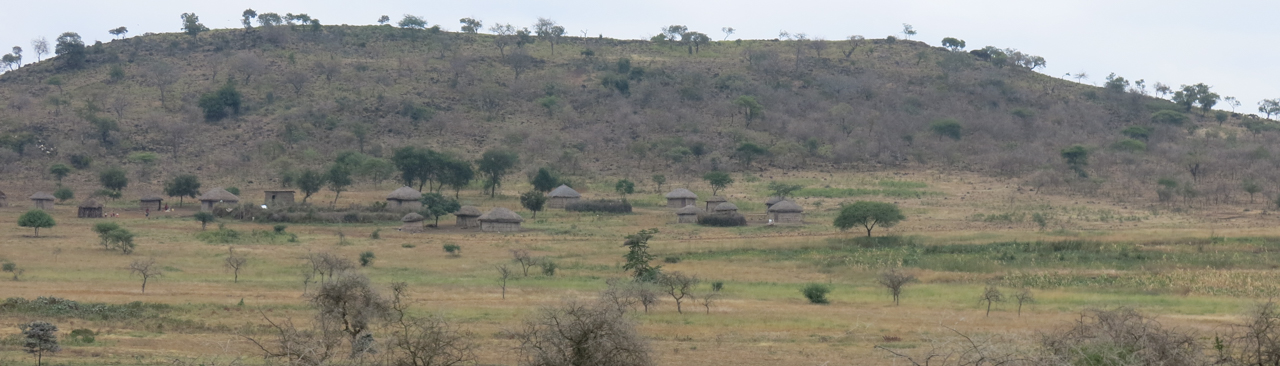
Driving out along the road from Arusha to Tarangire national park was .. surprisingly smooth and well maintained. There are even quite good road signs and in a way I believe all of the talk about it being impossible to self drive might be a little overblown. A view out the window gives a glimpse into the life of the Masai who’s Boma are visible from the road (traditional villages consisting of mud huts). The countryside driving out of Arusha was greener and appeared arable but travelling further north (as described later) you drift through many k’s of white, dry clay like soil with little or no grass, or trees. I would imagine that the Masai close by to Arusha live a far better life than their friends to the north.

wpid184-IMG_6837.jpg
Masai Boma alongside the road – I hate pictures from moving vehicle but alas it fits the tale


The weather was also surprisingly nice, it had rained recently in Arusha which was unusual for winter and it was a welcome change from bone dry Solwezi in Zambia. The exception to this was the obviously huge mountains and ranges nearby which are due to the divergence for the Nubian tectonic plate and the Somalian tectonic plates which are drifting apart (Wikipedia article for the love of further exciting reading). This divergence creates two depressions, an eastern rift, which is where we were driving, and a western rift, which we will see parts of during our travel in Rwanda. The eastern rift is the cause for the volcanic activity generating mountains like Kilimanjaro and Ol Doinyo Lengai, and valleys which contain lake Natron and lake Manyara.  Tarangire national park is within this rift valley.


wpid182-5N7A0586.jpg
Originality – Tarangire national park and the storm of landcruisers


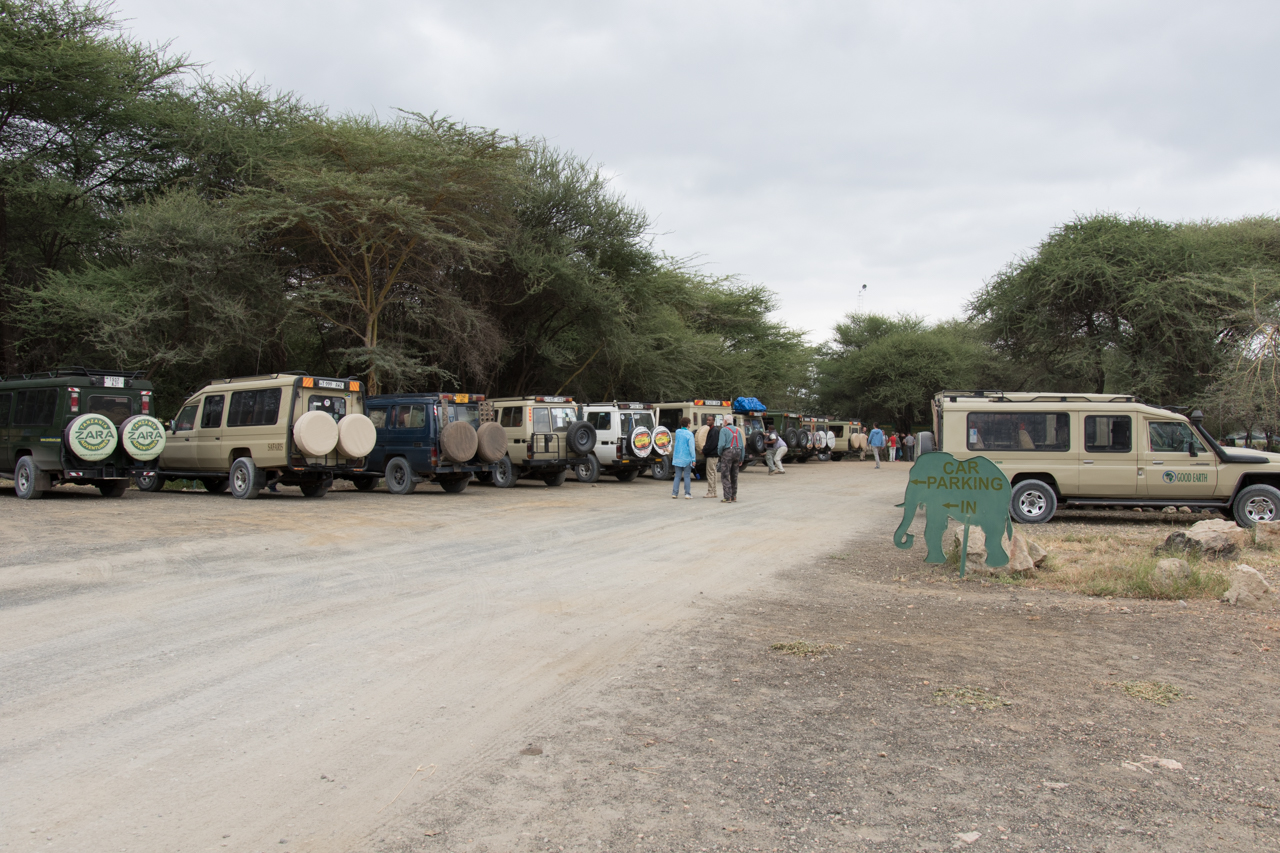
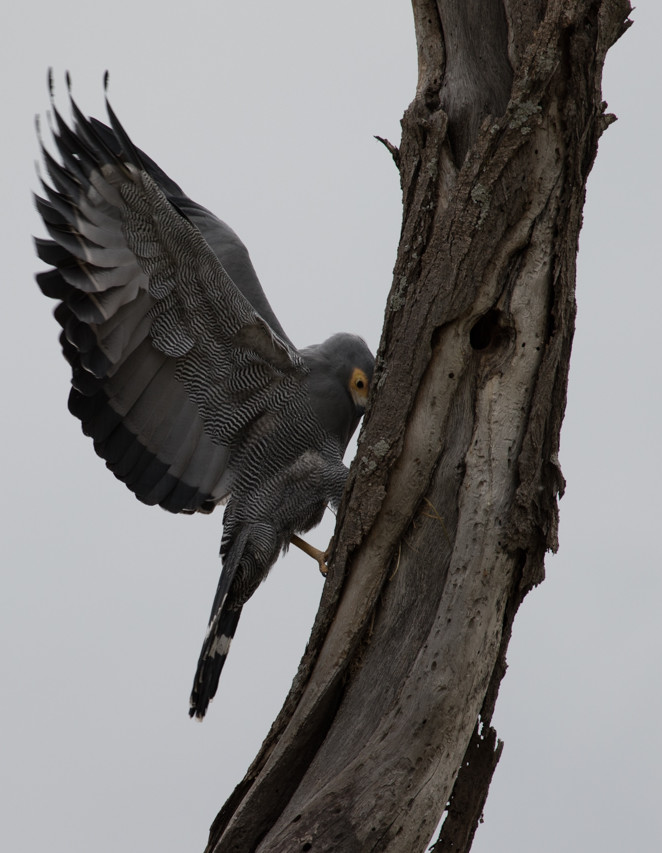
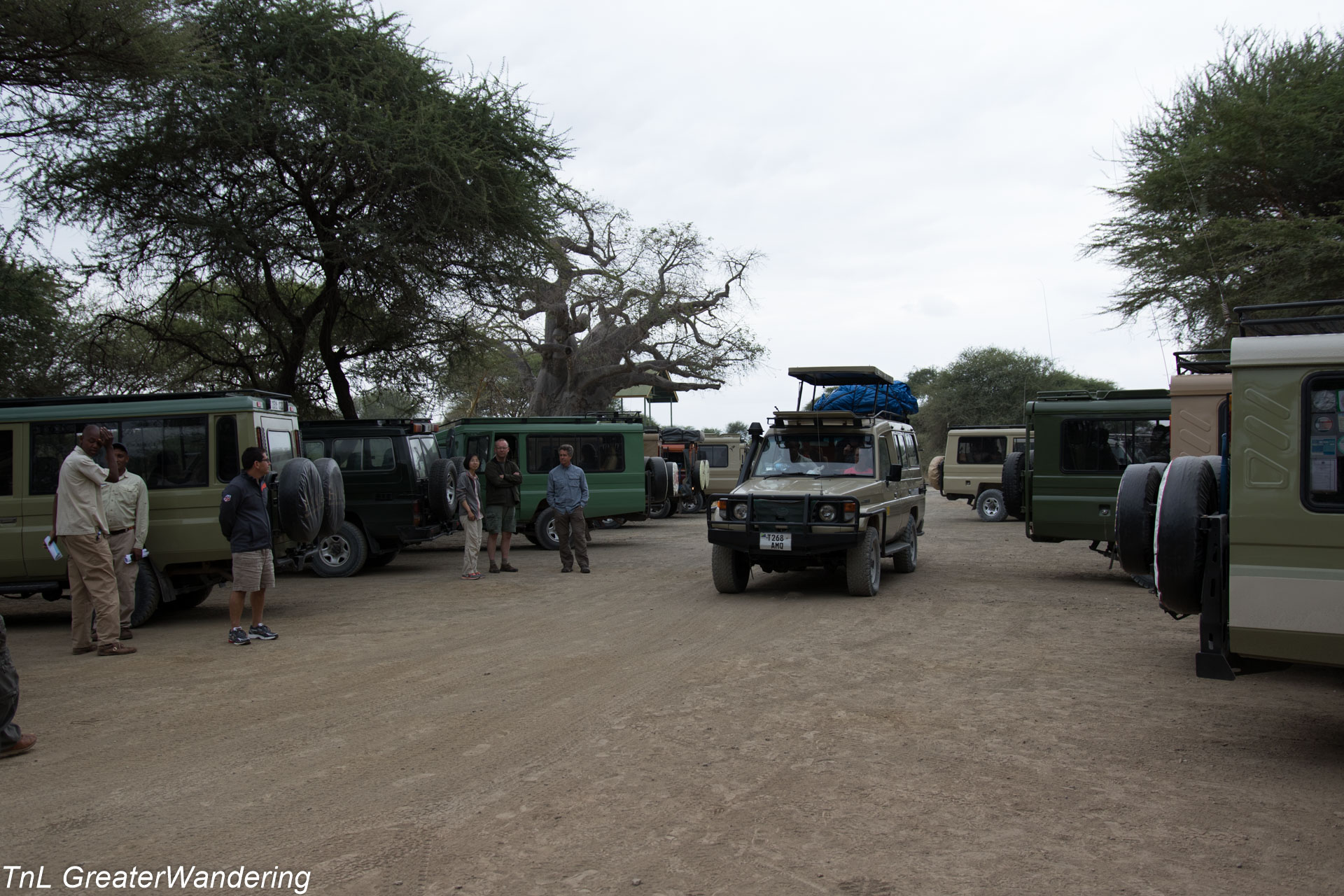
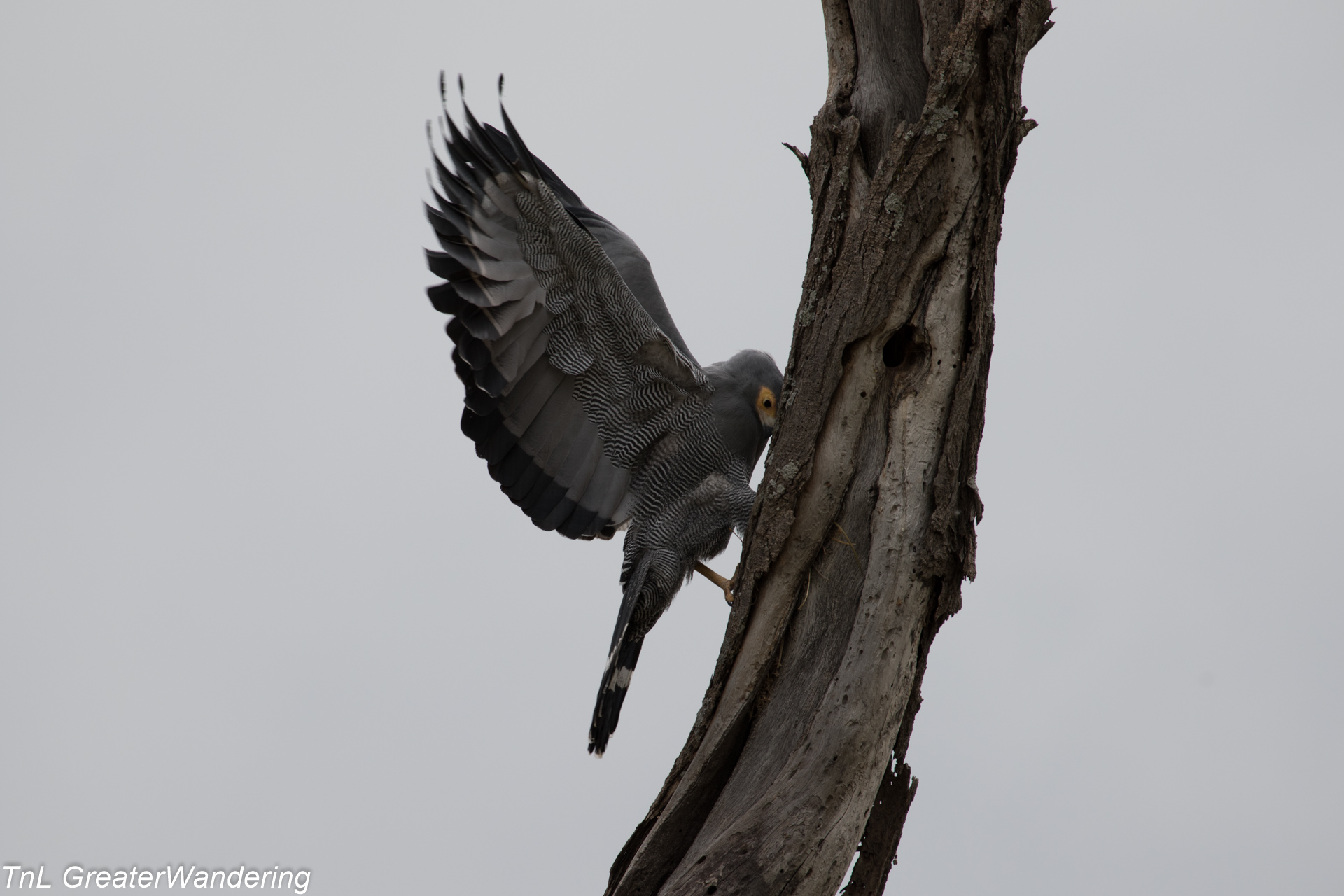
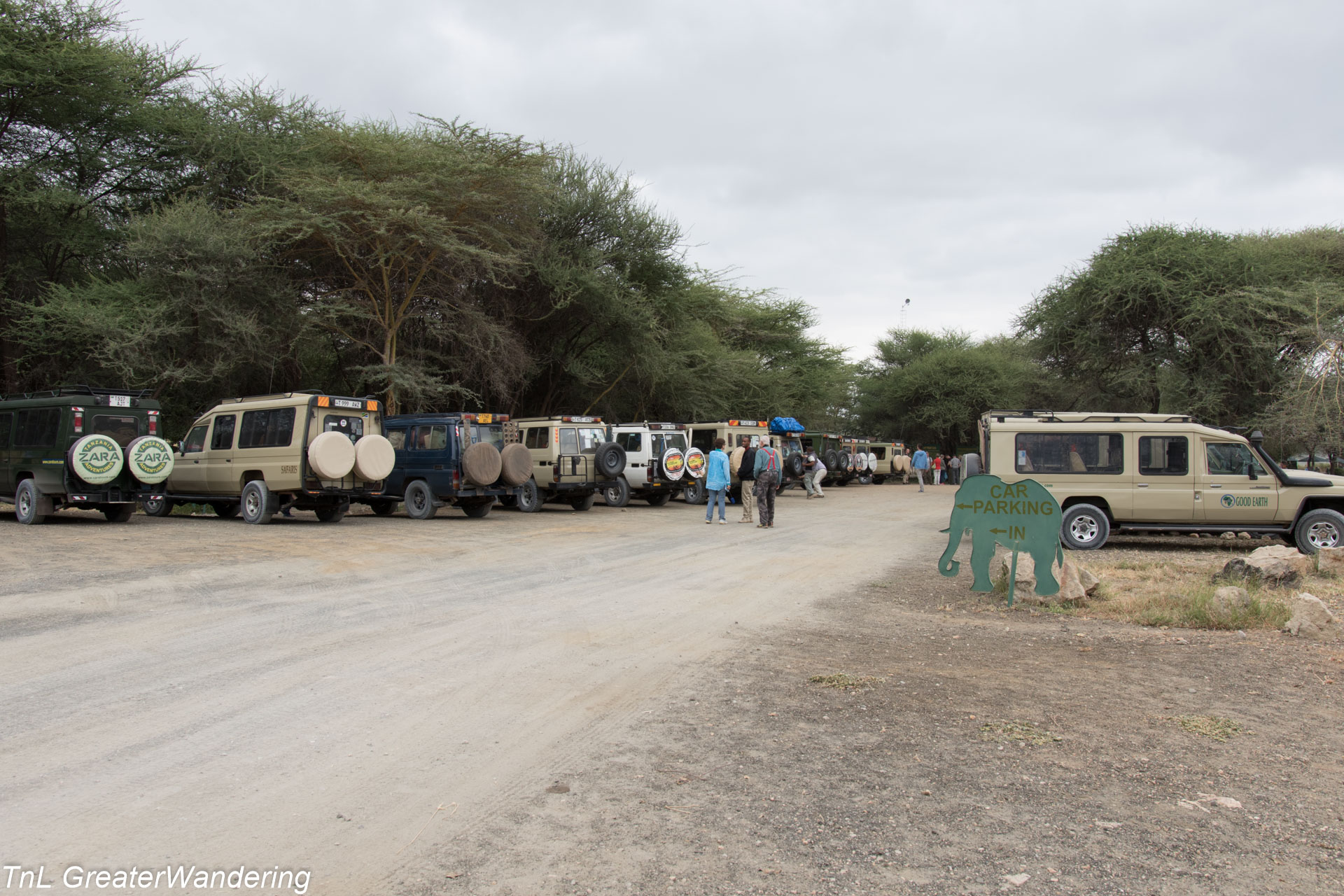
Entry into Tarangire national park was all rather straight forward, especially when your driver does all the talking and you largely know nothing of what’s happening.  It’ll also be (if it’s your first park that you come to) the first time you’ll realise just how original your idea of going on a Safari in Tanzania is. This was like no national park I’ve been to in Australia, there was probably fifty nearly identical safari vehicles lined up in the car park all waiting for the admission. Think you’ve got some sort of original concept or your cars special, think again. What we couldn’t quite understand is how many companies exist that you don’t see on the net when searching. Maybe some are more accessible to people who don’t speak English or Russian, or maybe the companies we investigated online just had better placement in search engines or a greater quantity of participants who were willing to leave their comments online. Strange, moving along as I was still a little disappointed that we didn’t have a V8 Landcruiser…. So this was it, my father got his GPS setup spectacularly, camera’s at the ready, fees paid, time to see some zebras chasing lions or whatever happens in these much fabled safari parks. Only about a minute after we drove past the guards/ rangers / masai warriors hut we were stuck behind a bunch of other cars and we bore witness to an African Harrier hawk doing it’s best to pull something out of a hole in a tree. wpid181-5N7A0633.jpgYou then forget about un-originality and the quibbles in your mind grasping onto the price you’ve paid and start enjoying the trip for what you came for, sites of things you just don’t see in the other six continents. It’s interesting that we’re interested in watching them and we think they’re great, I’d like to know what they think. Trains of passengers passing them by each day, we figure constantly wondering what exactly it’d be like to eat a few of them.
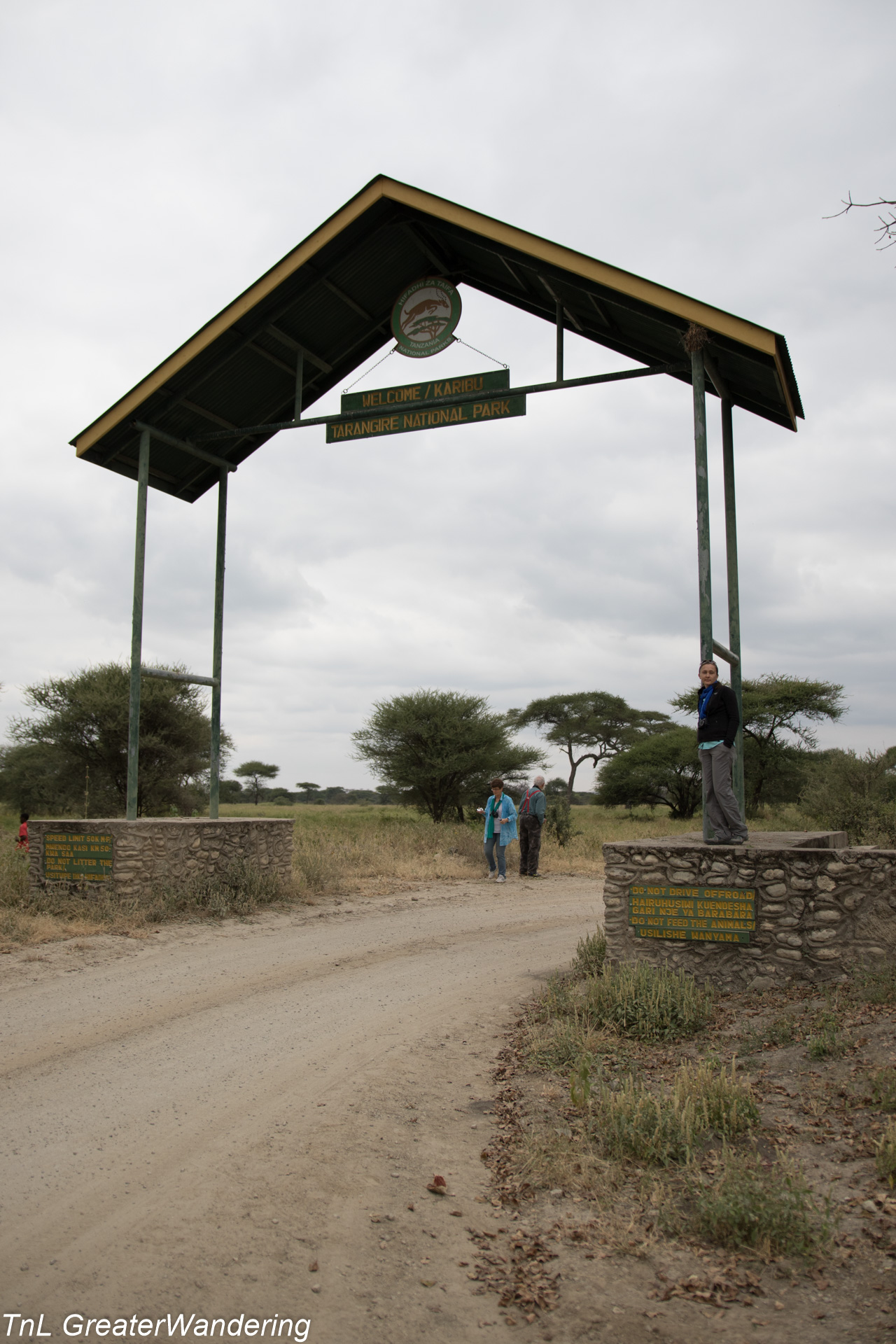
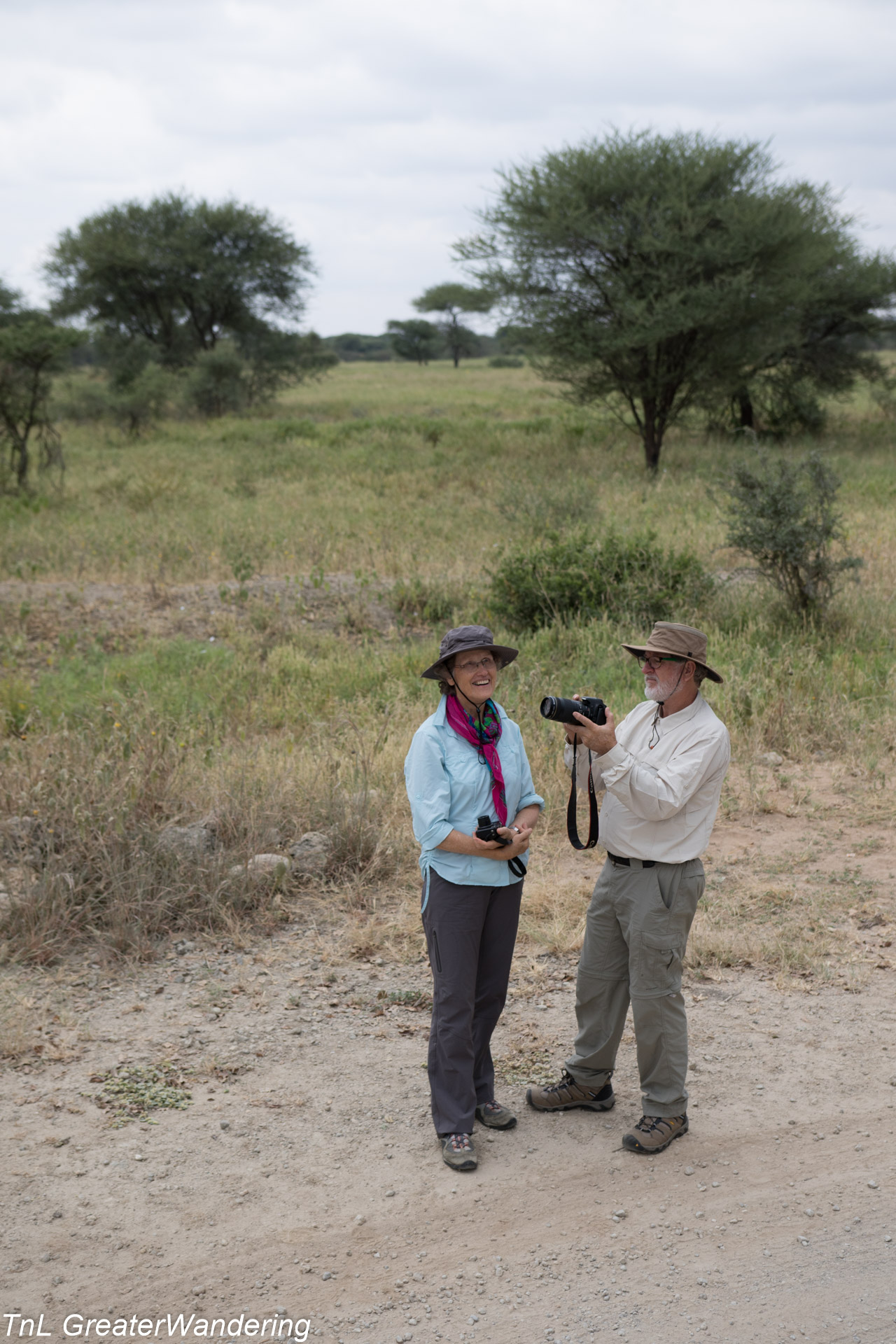
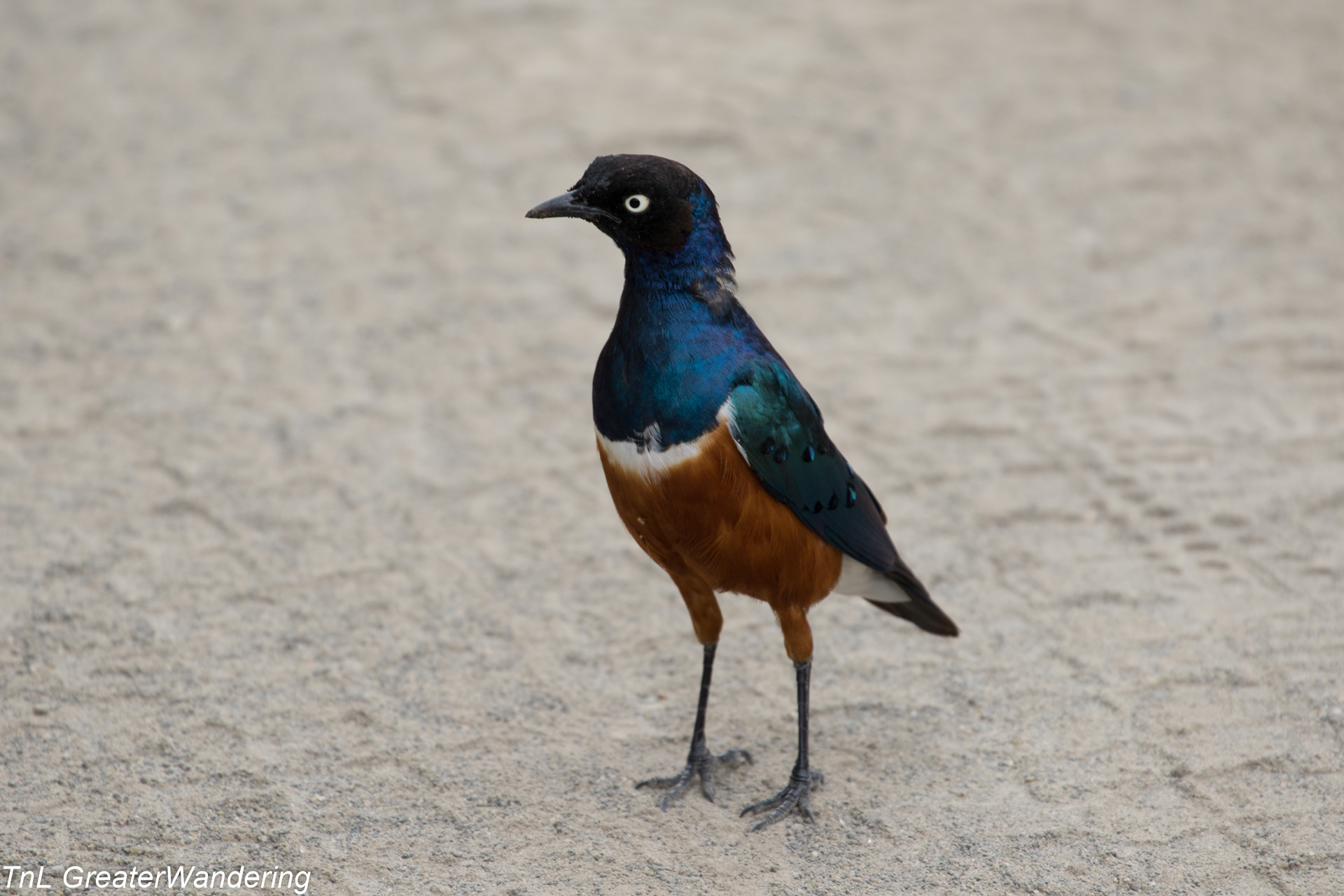
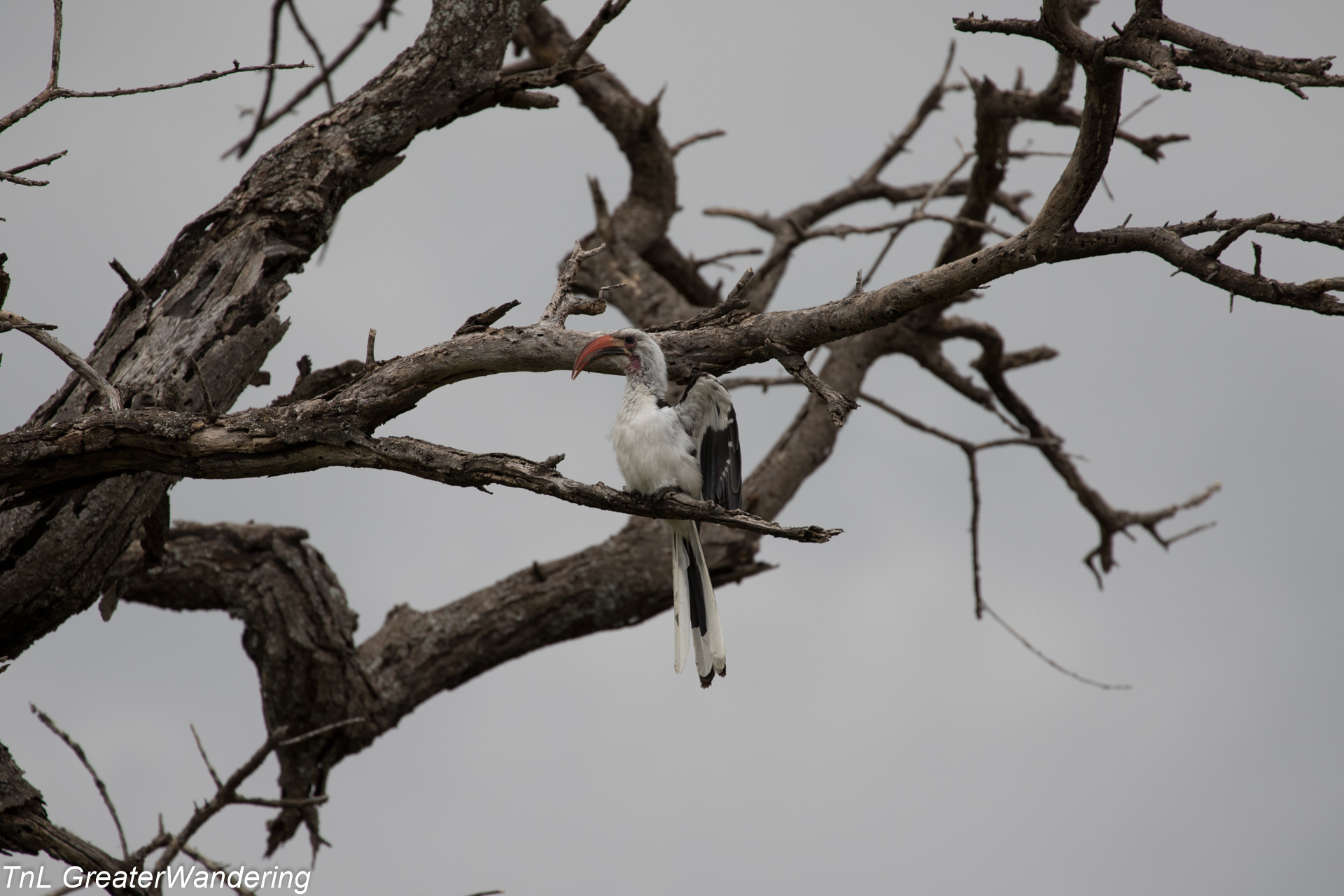
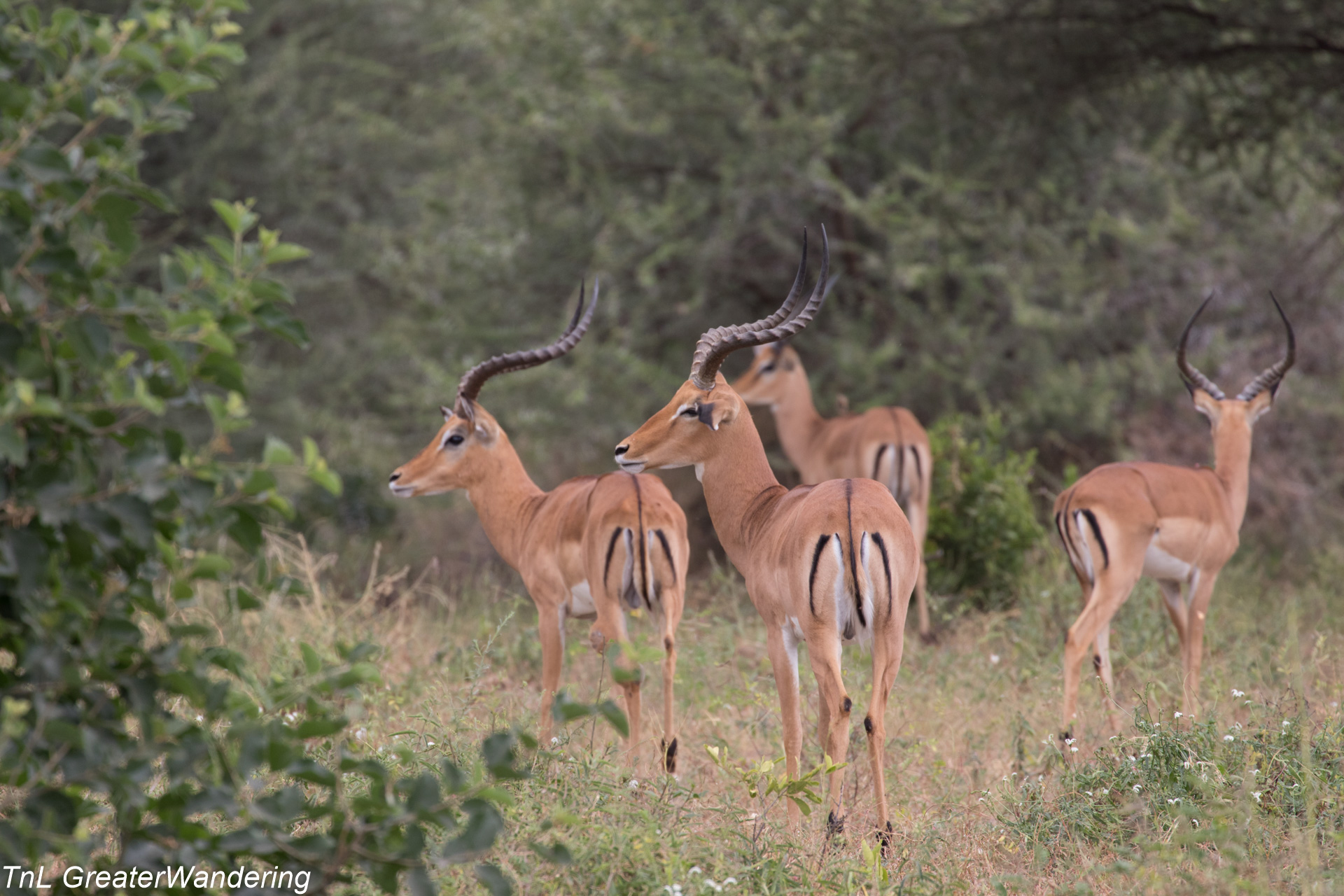
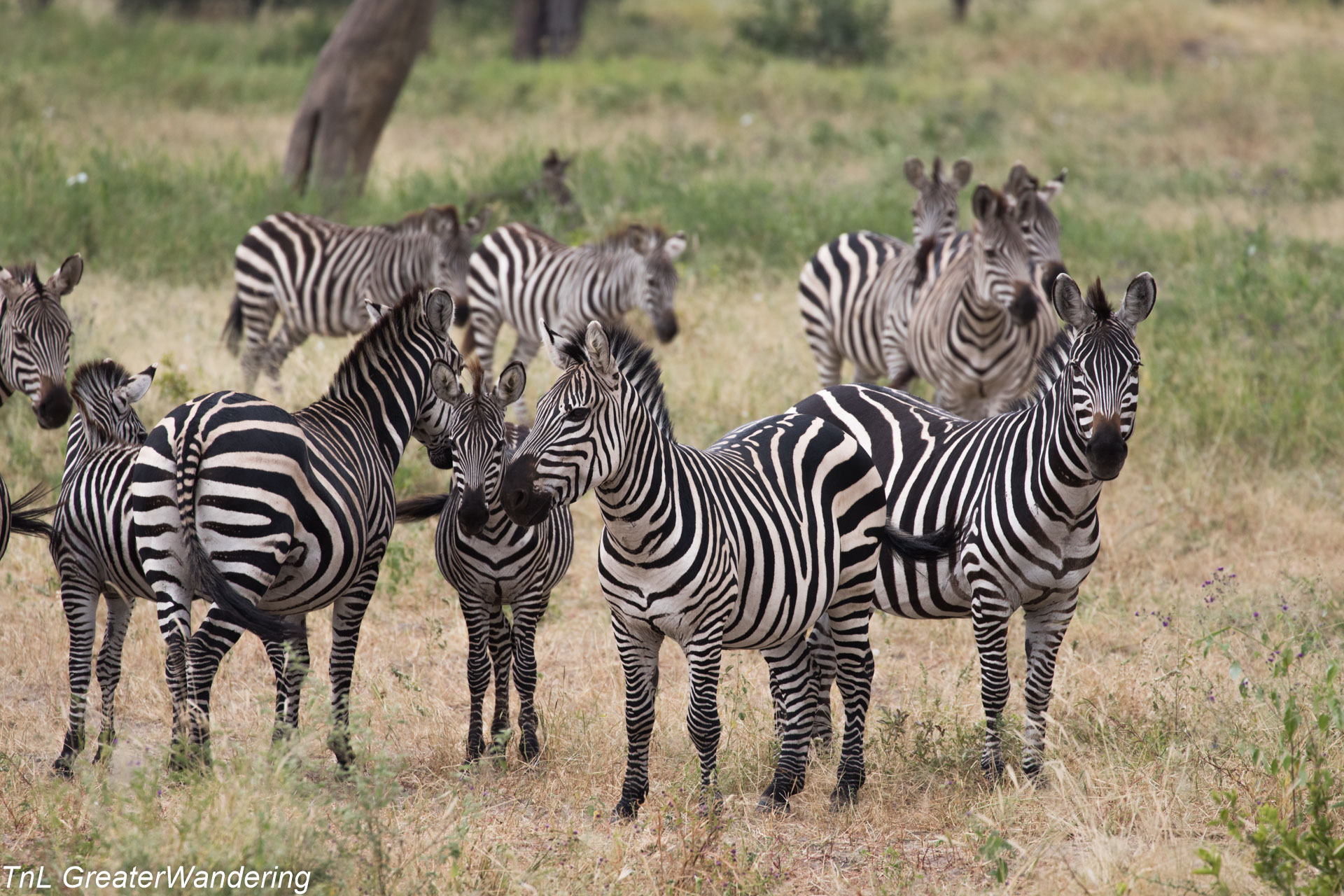
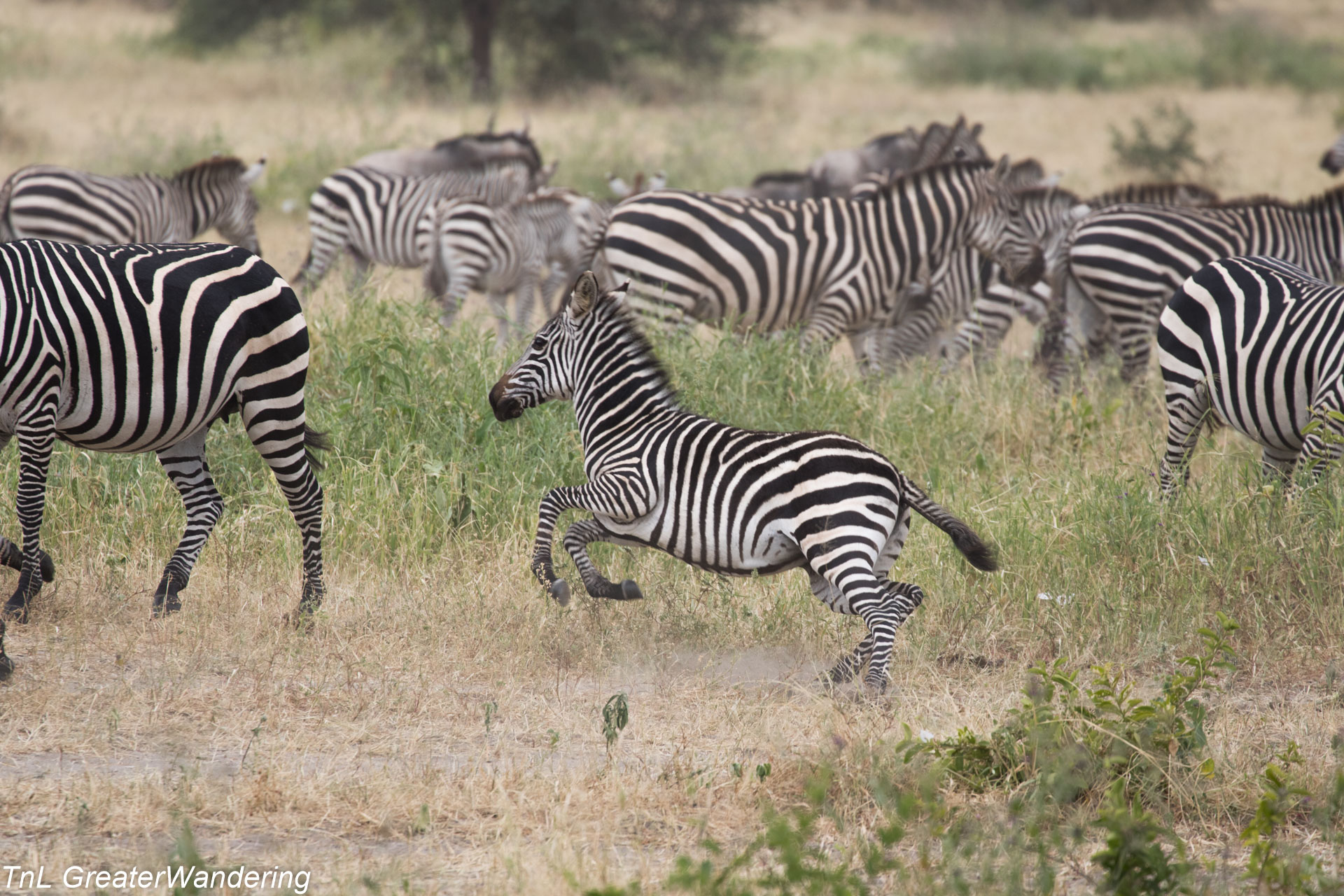
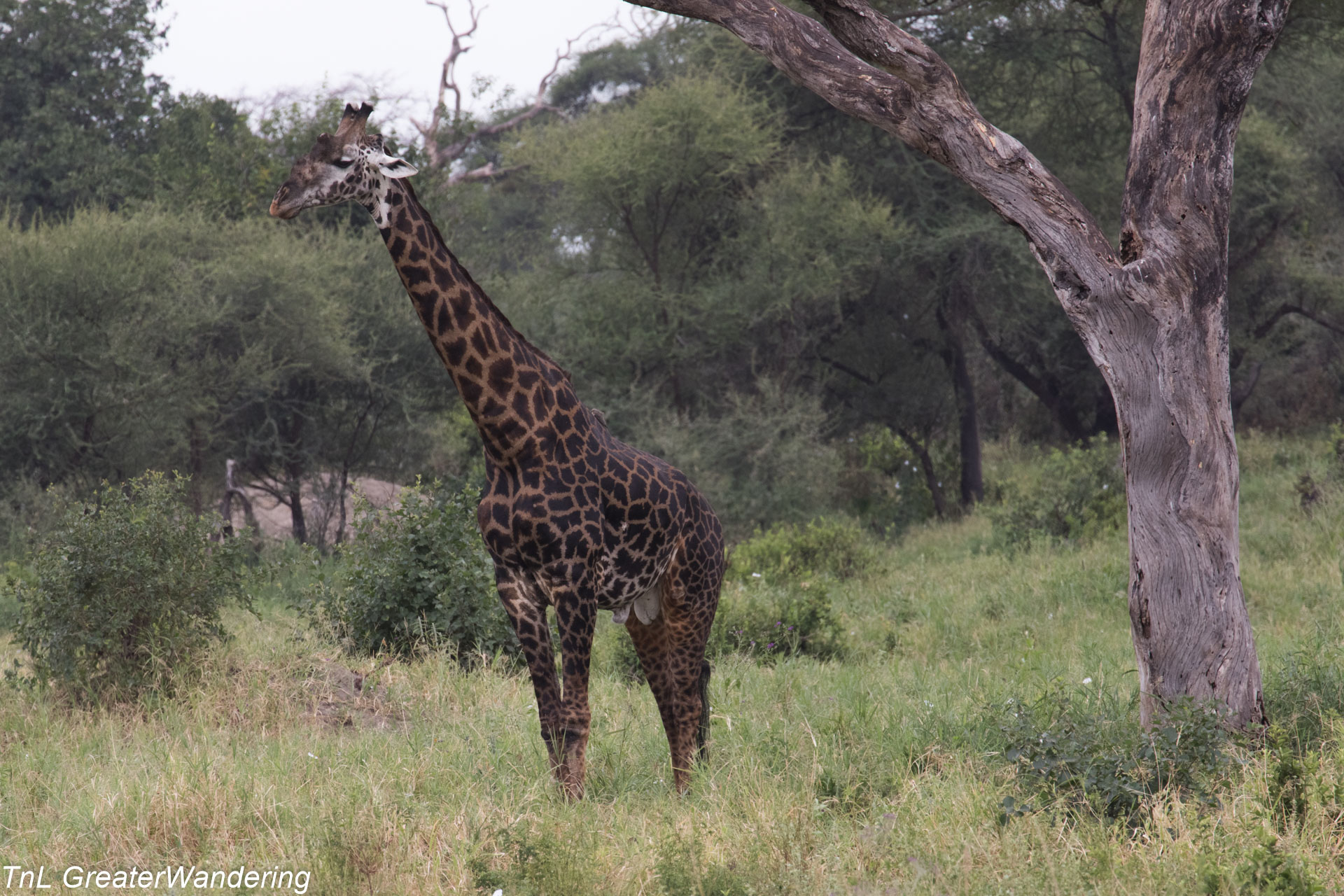
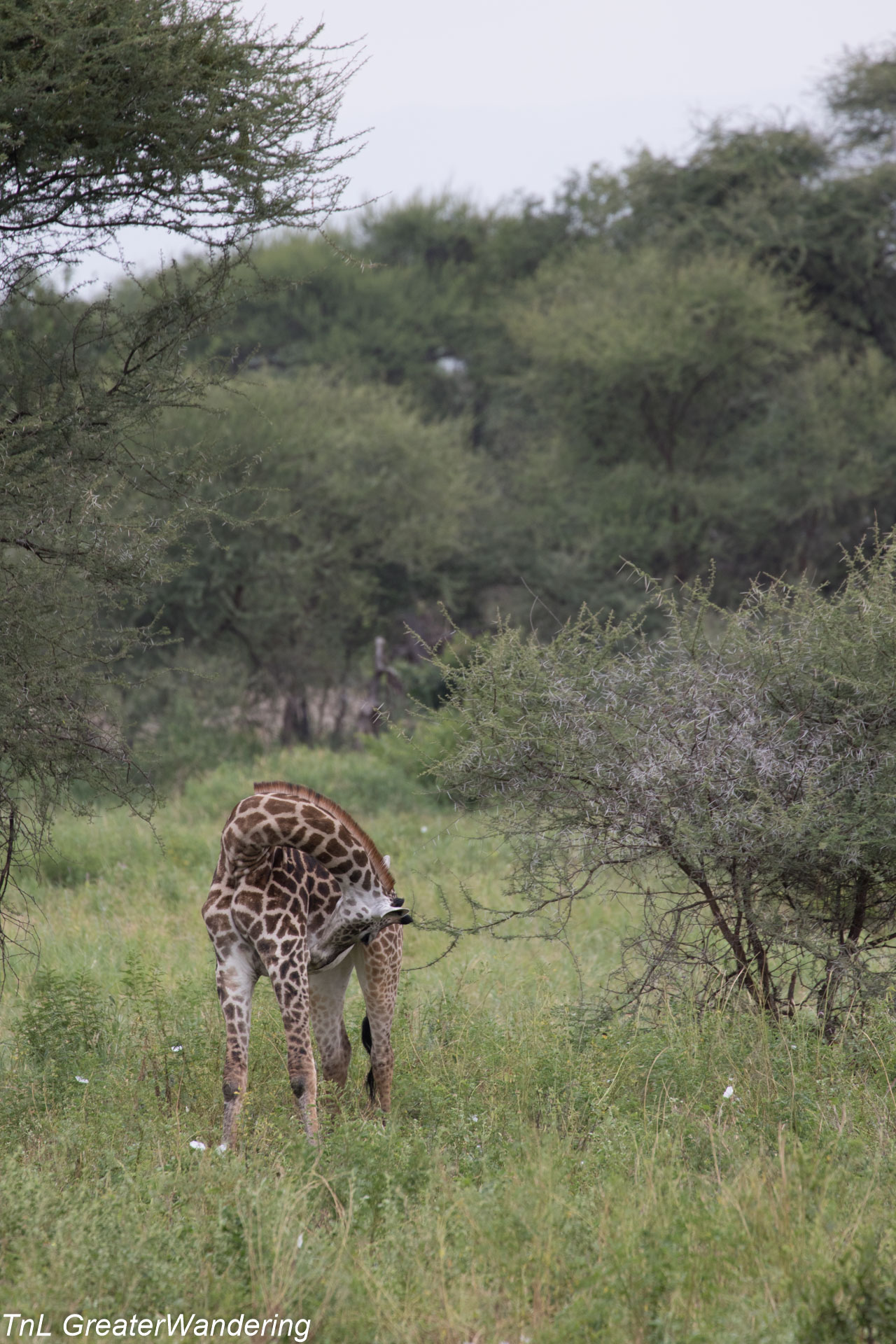
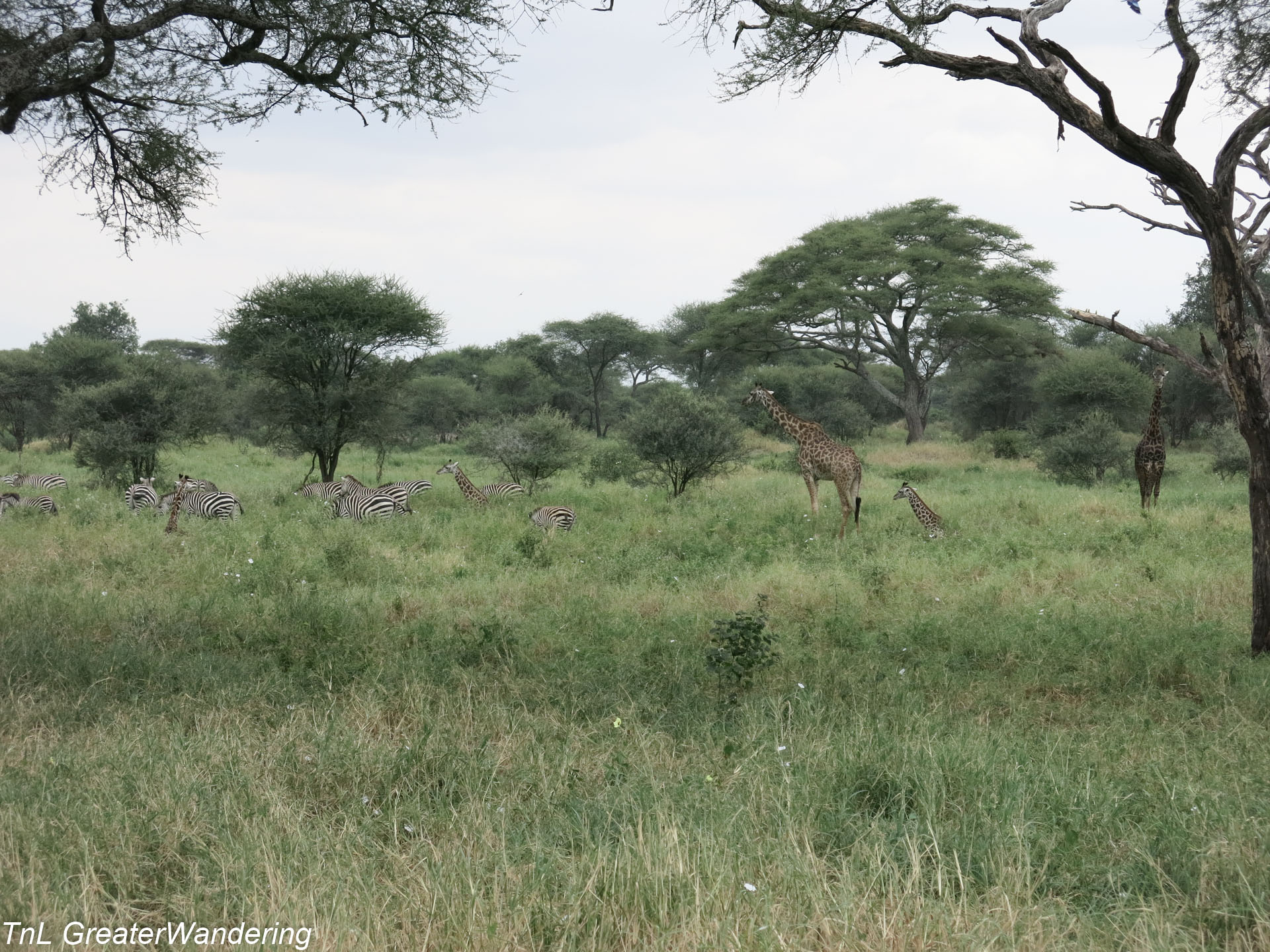
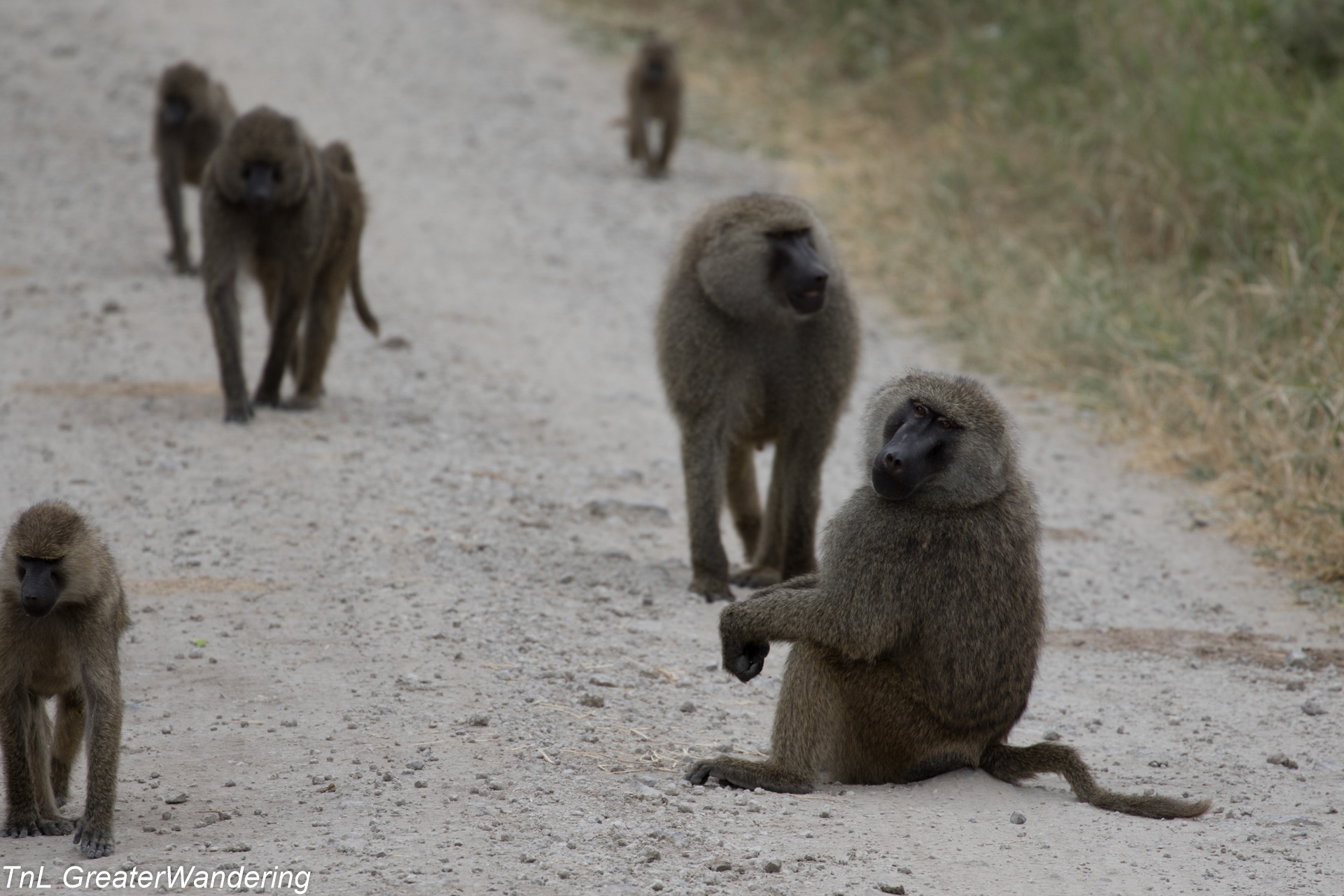
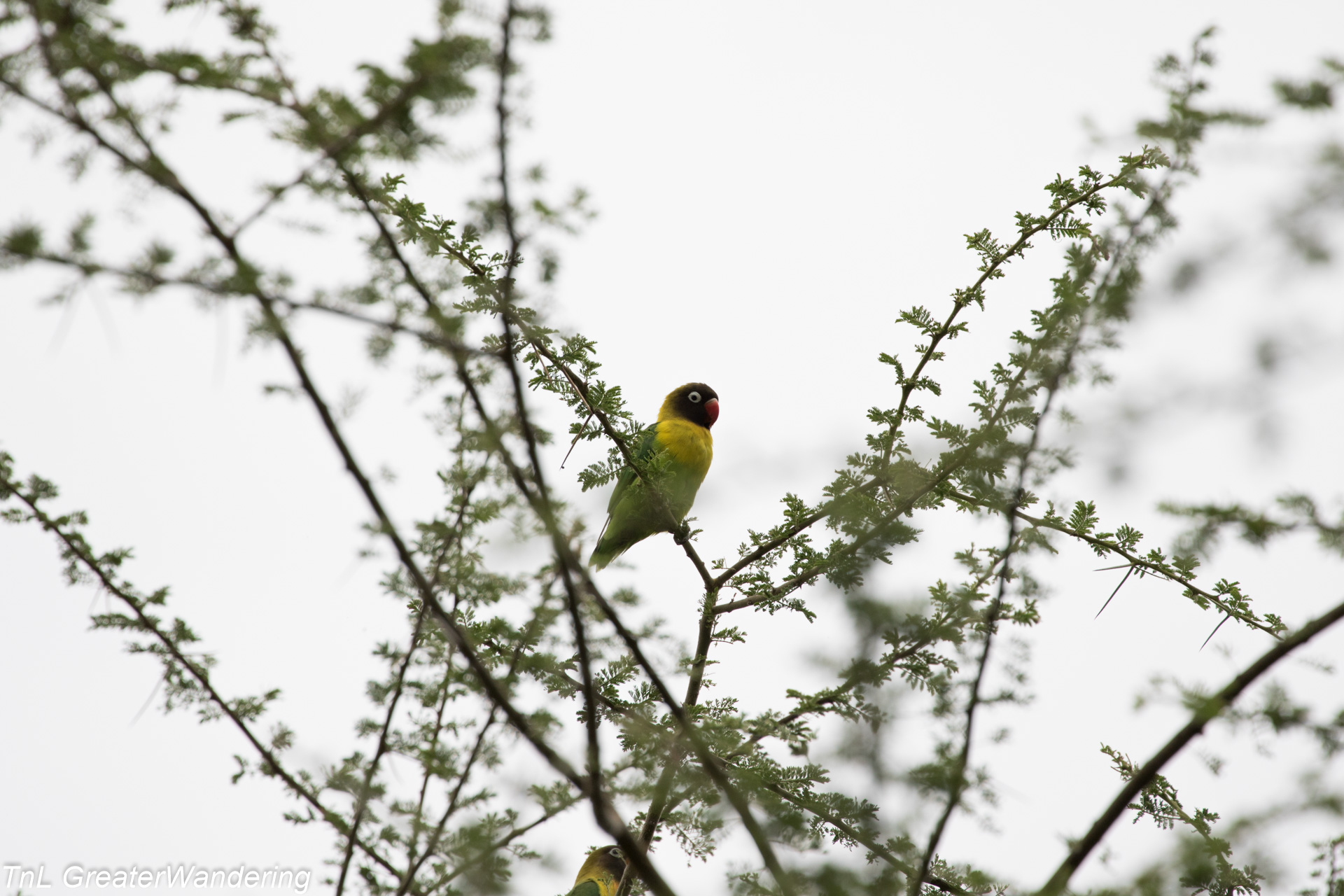
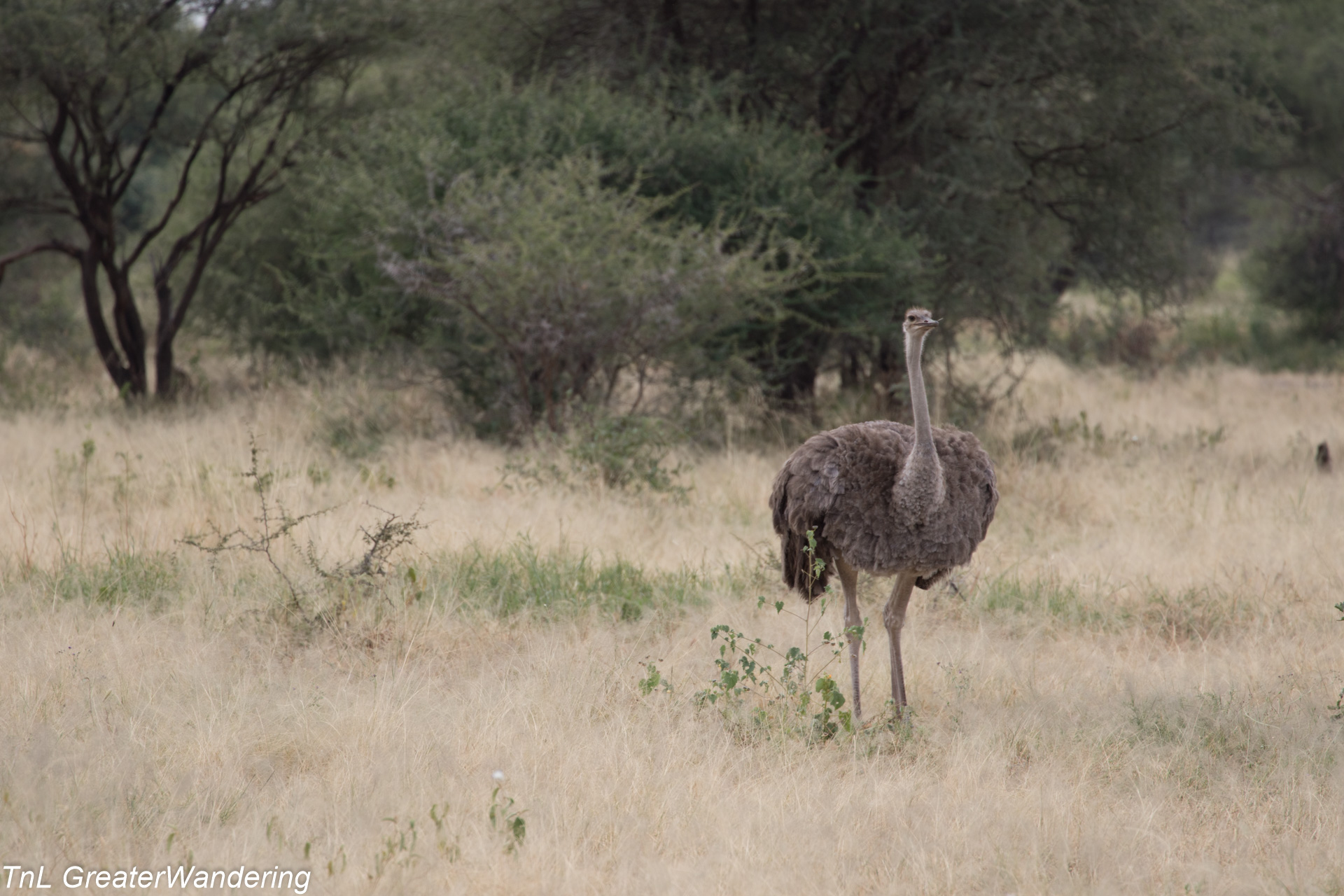
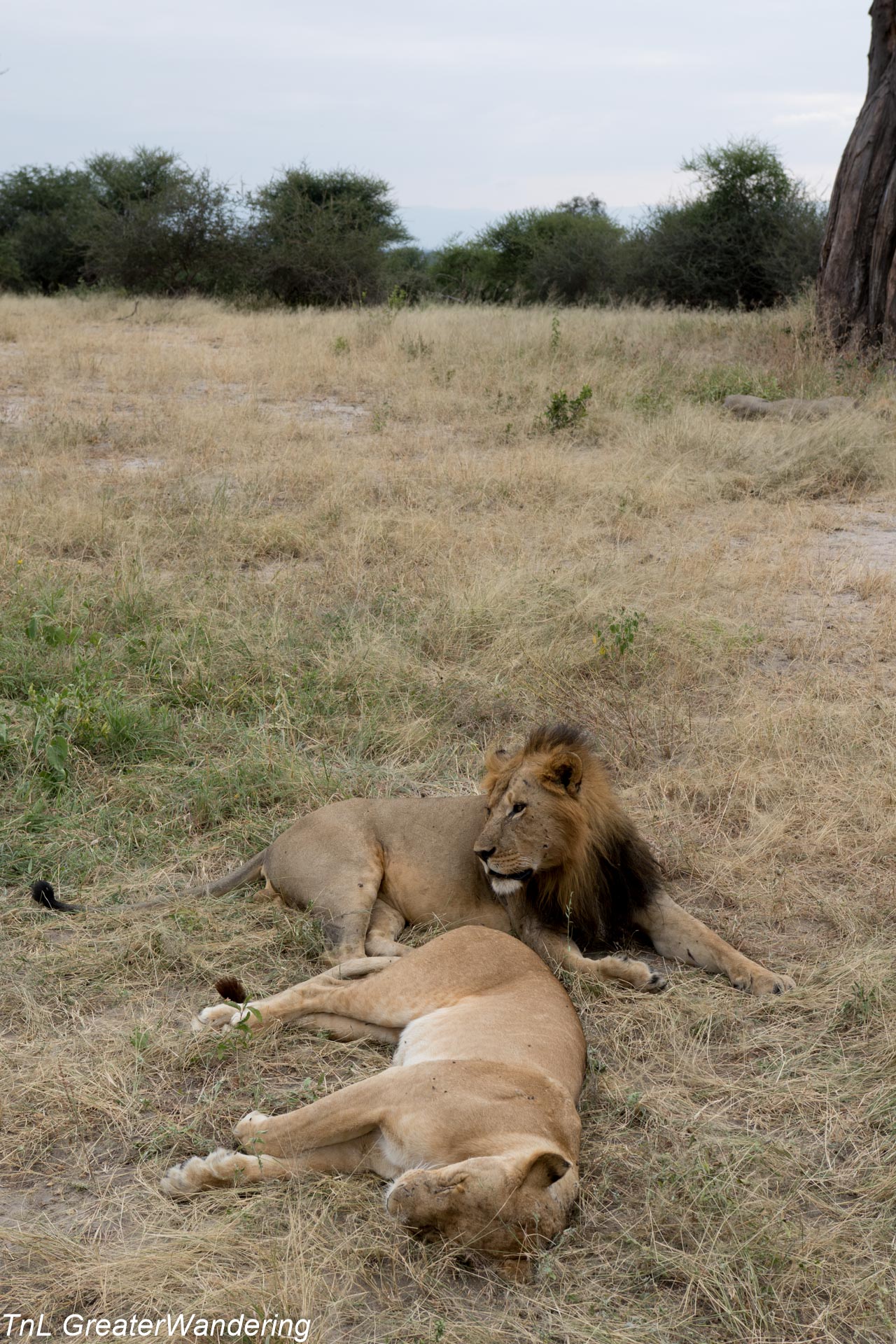
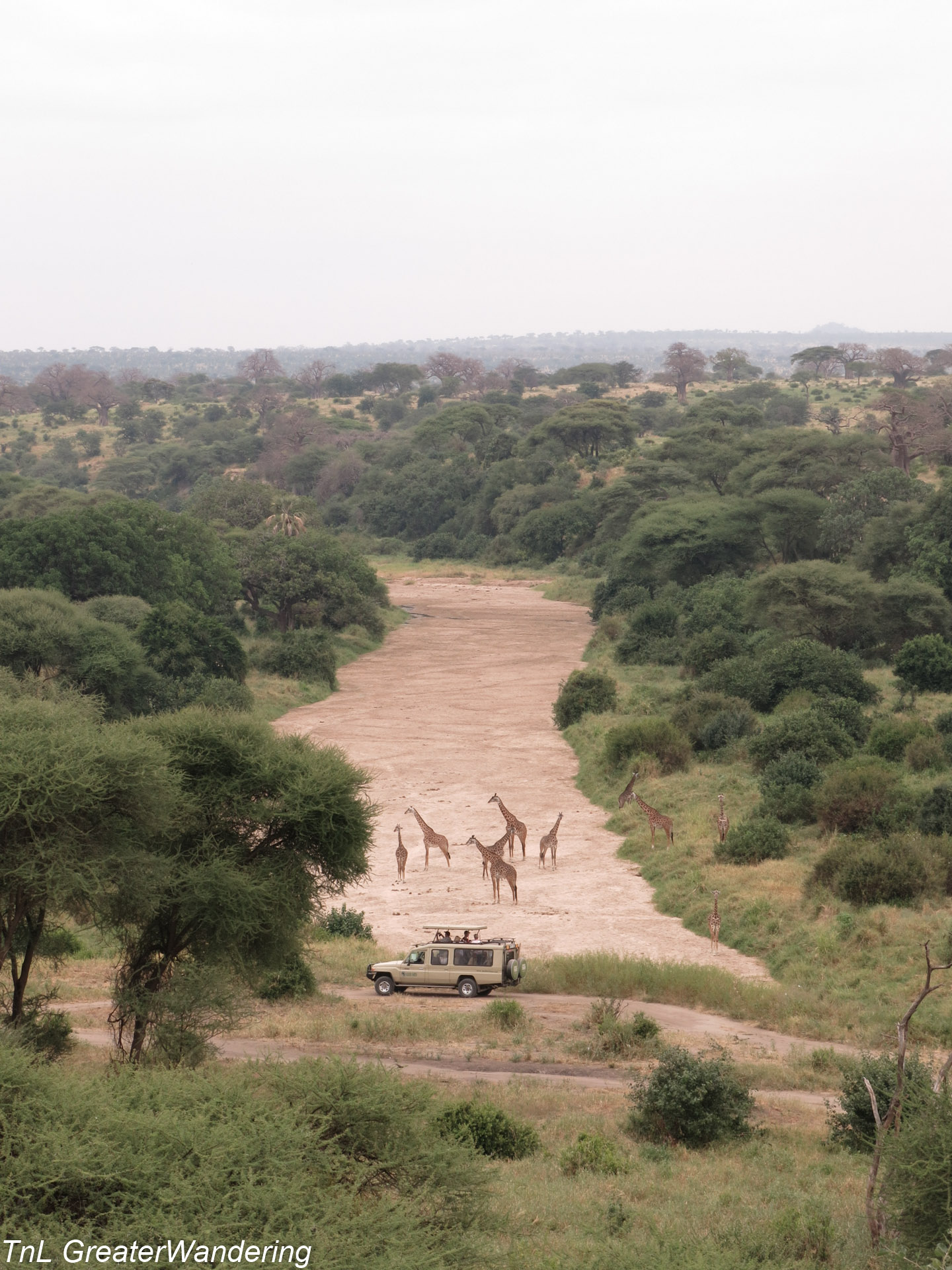
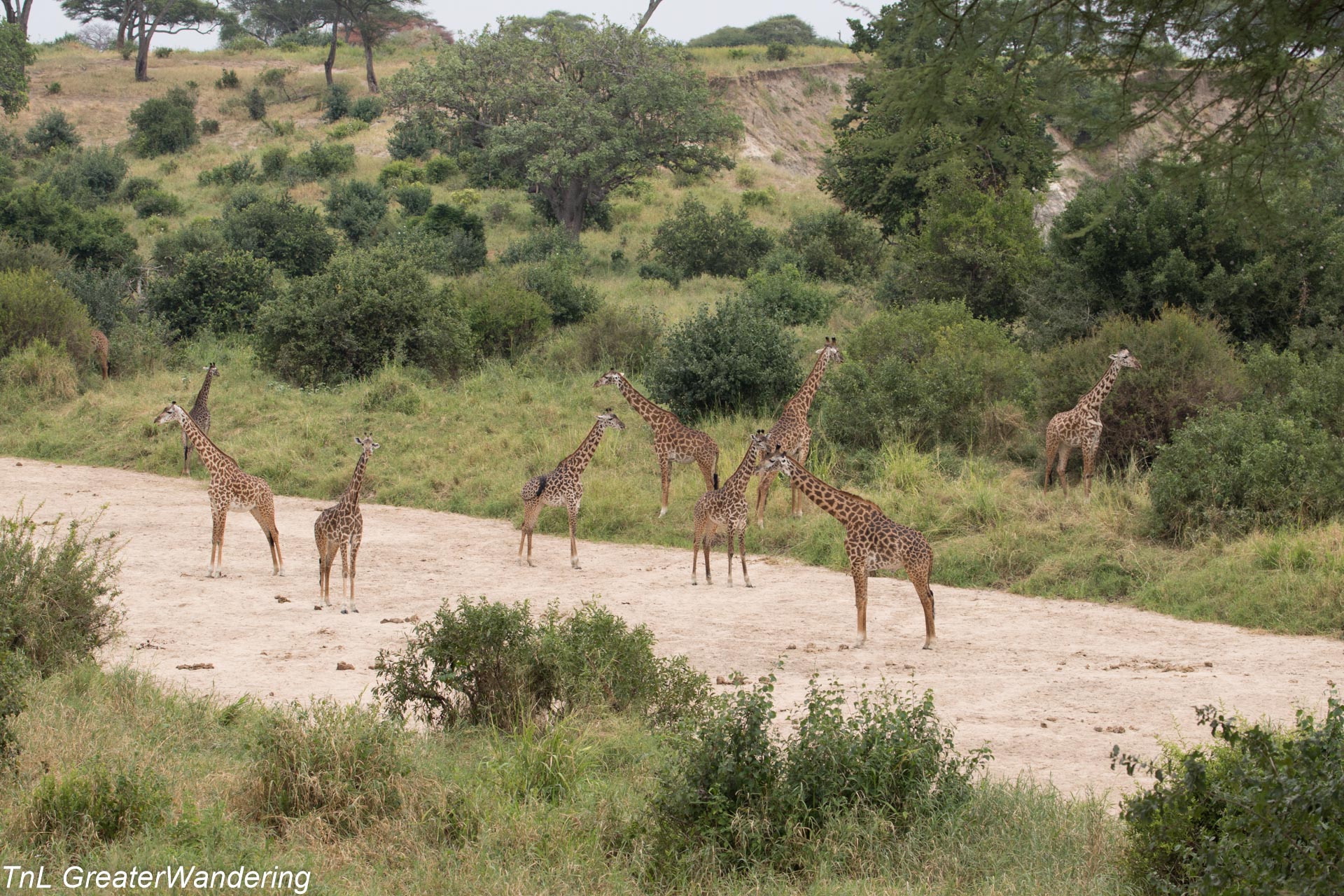
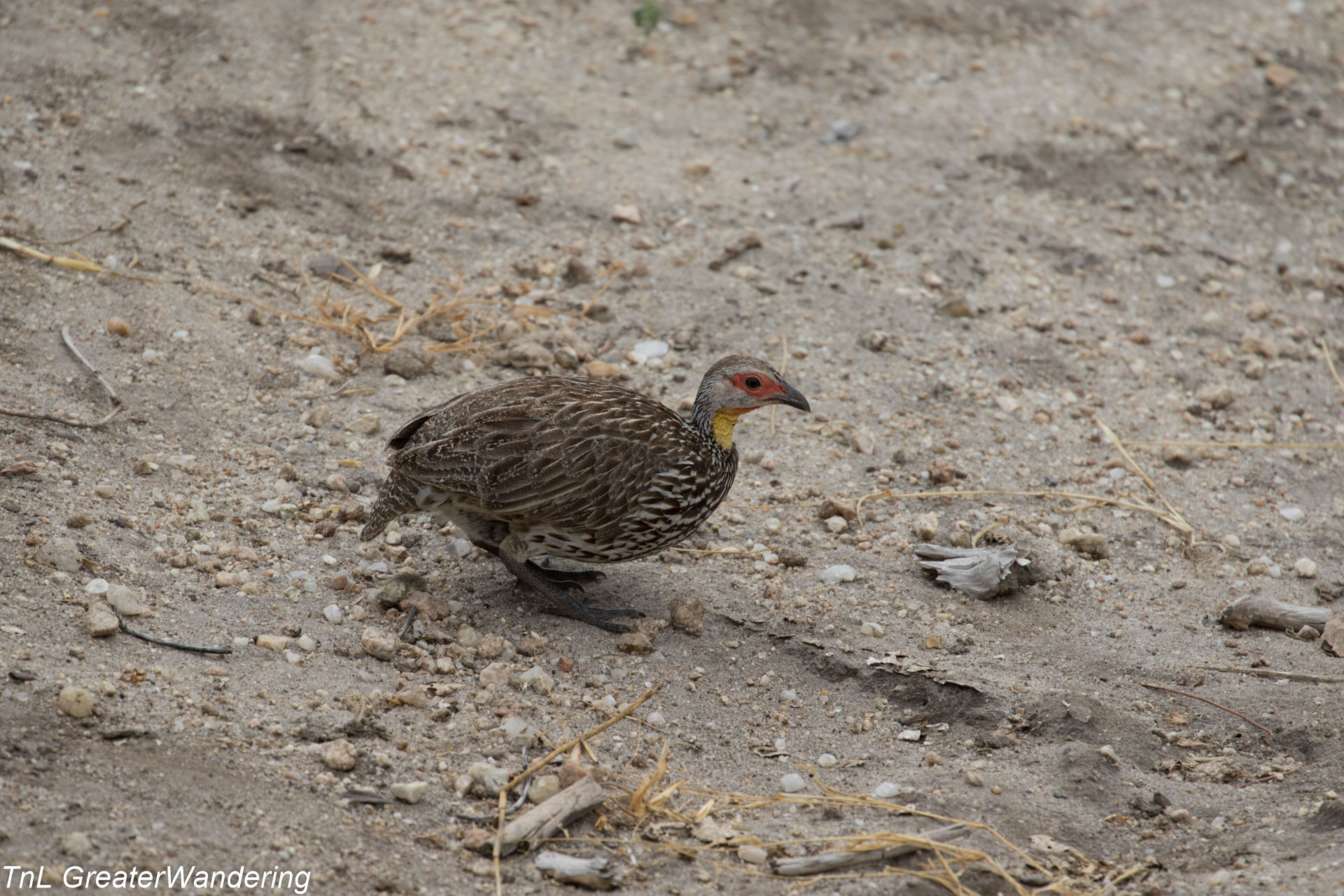
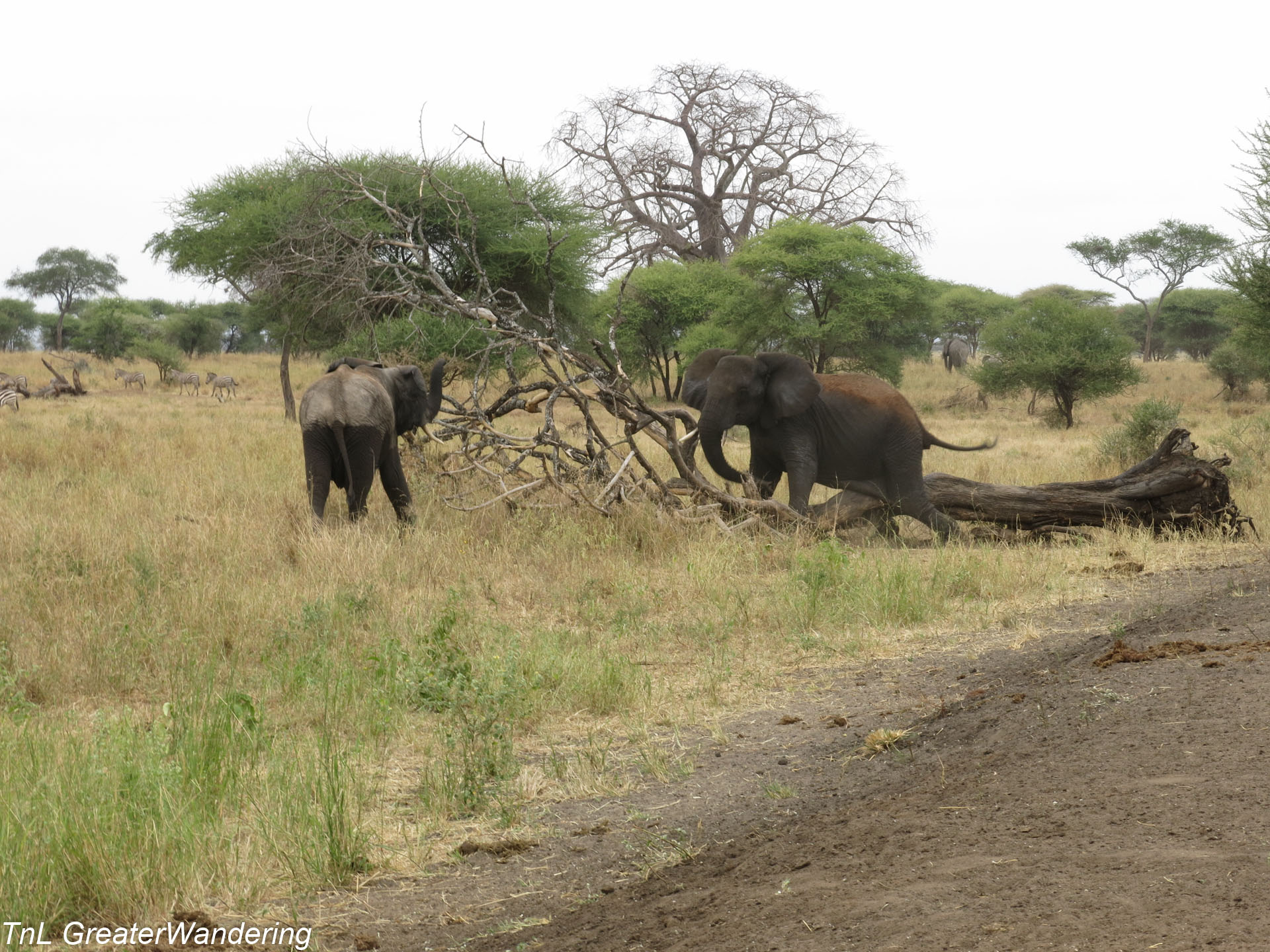
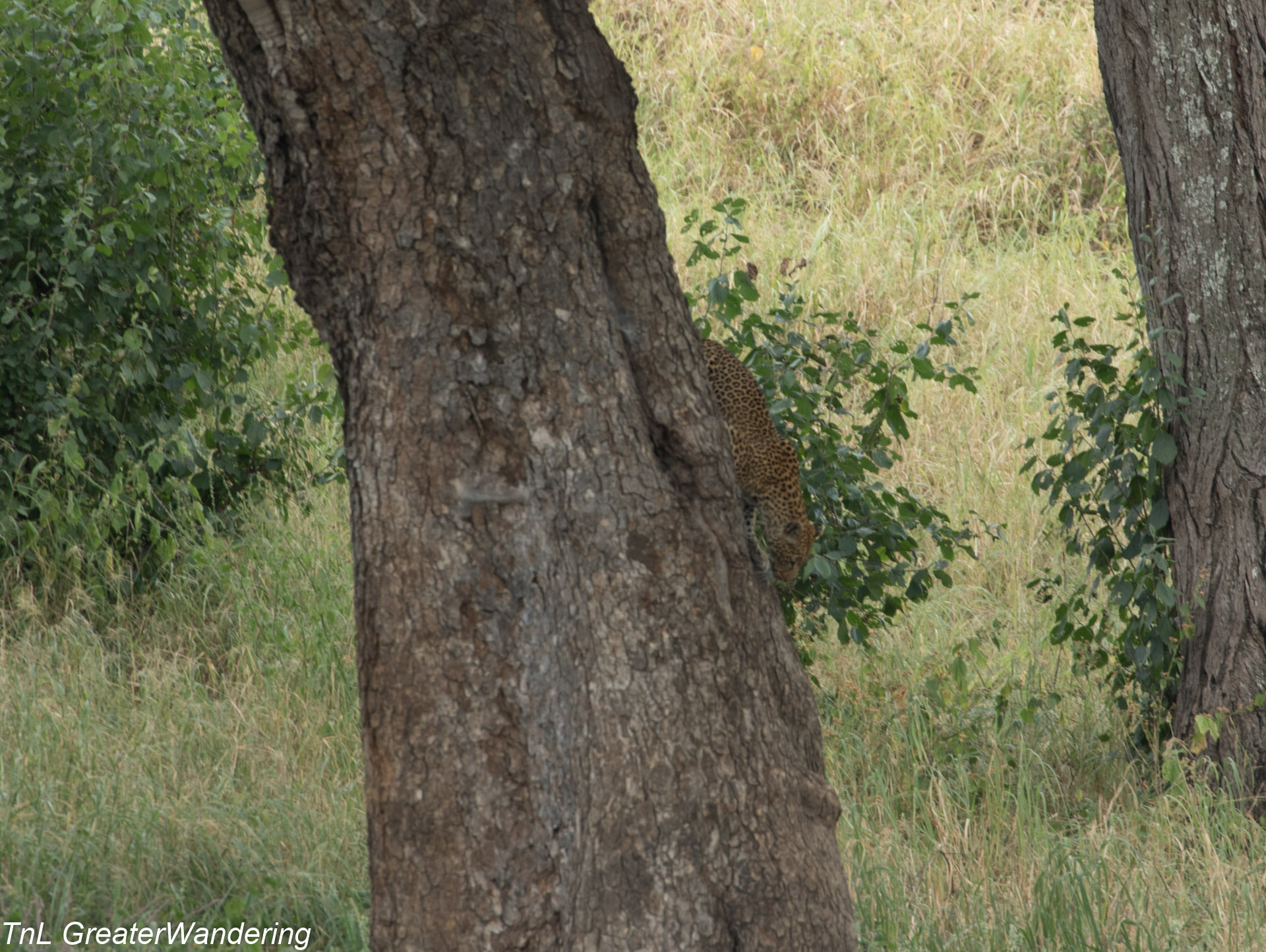
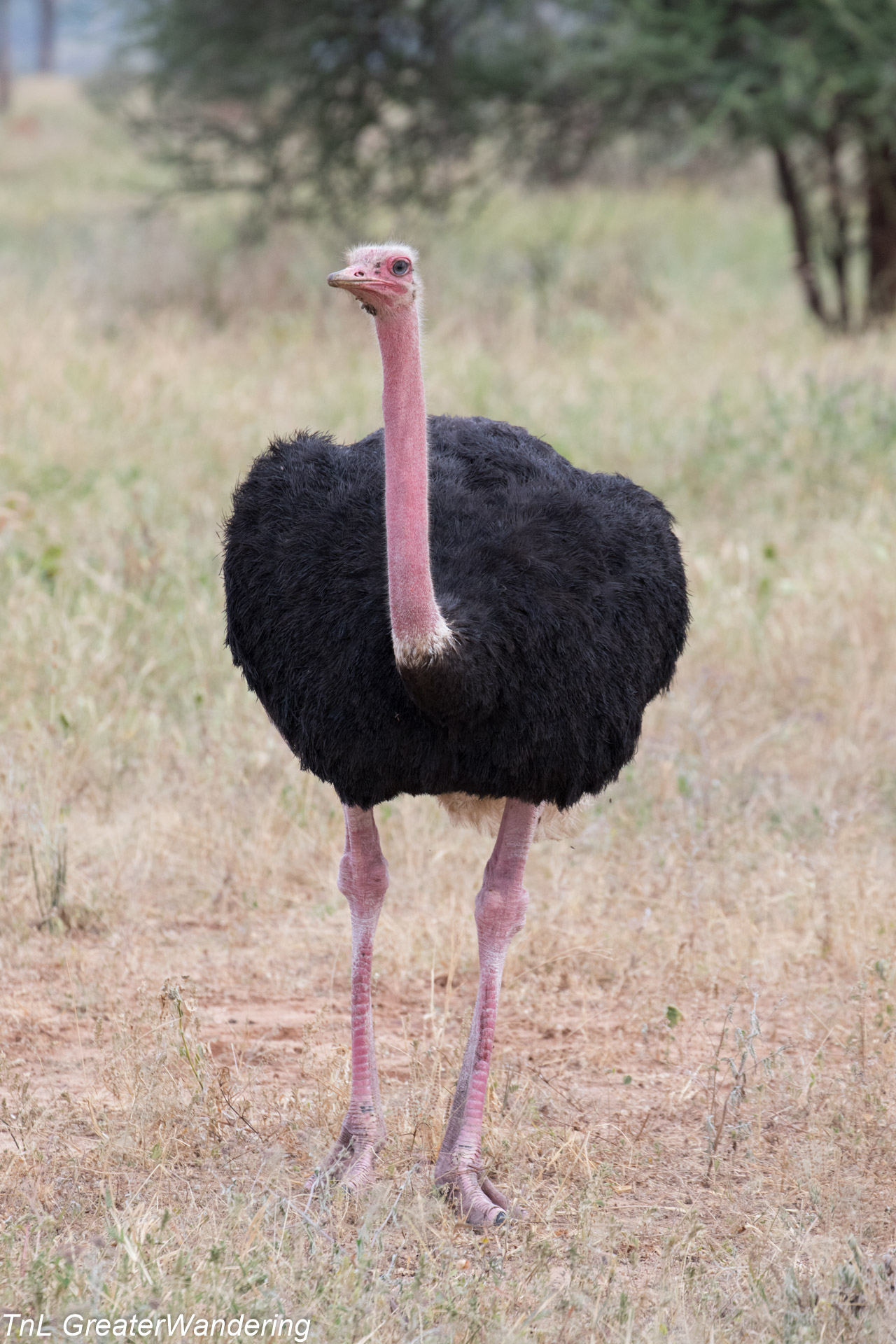
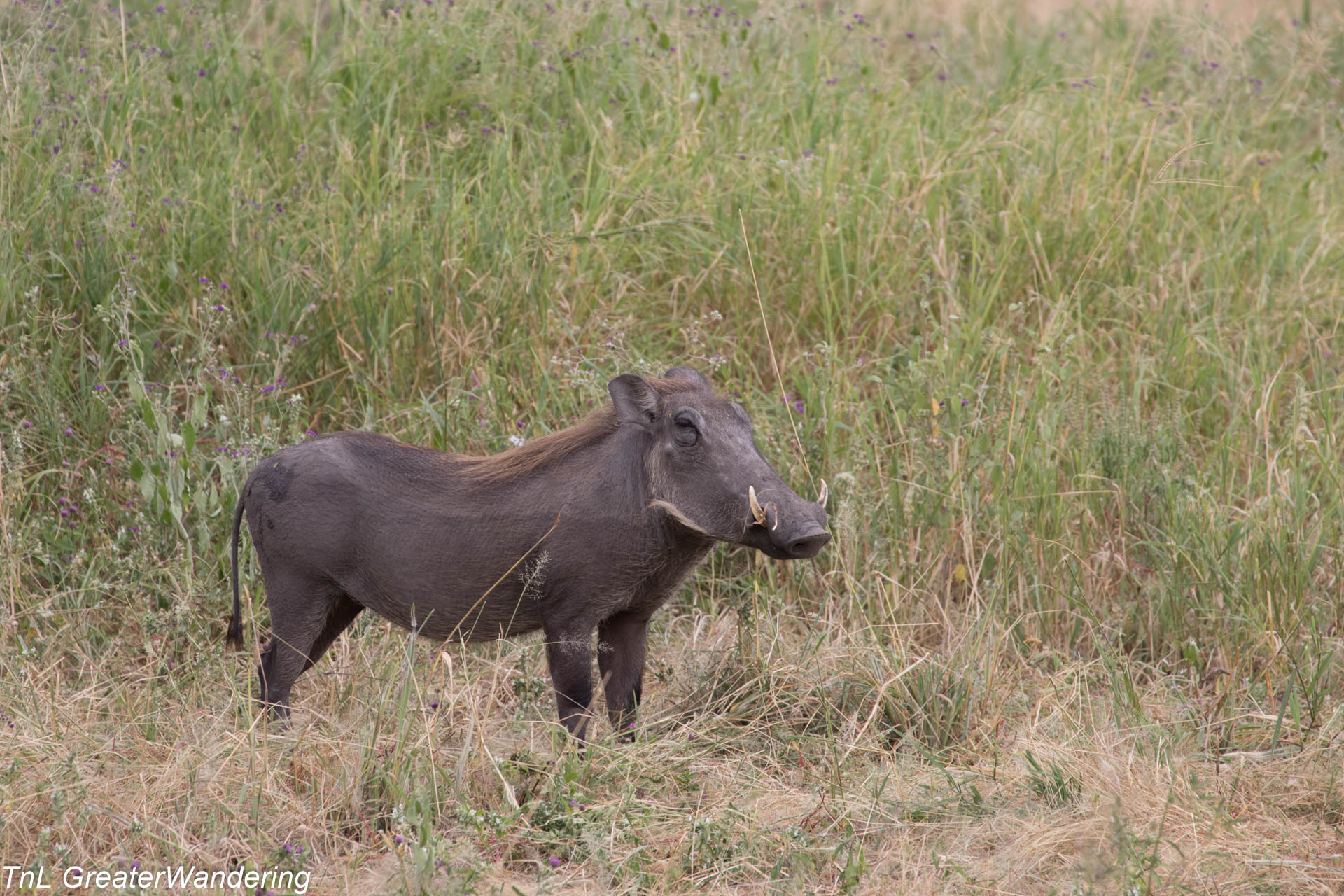
From that point forward in Tarangire we saw what you would expect, zebras, ostriches, vultures, lions, giraffes and even a leopard from quite a distance.
This was all quite wonderful really, right up until when we went to check out exactly where we were on the planet and unfortunately the planet had lost us. The GPS which was happily staying put on the window sill had decided that maybe we weren’t to be trusted anymore and headed off somewhere. Shame, hopefully the zebras can use it for the next migration, well considering they don’t migrate in Tarangire National Park then we could probably just rest assured that it’s quite gone to waste. Shame man.

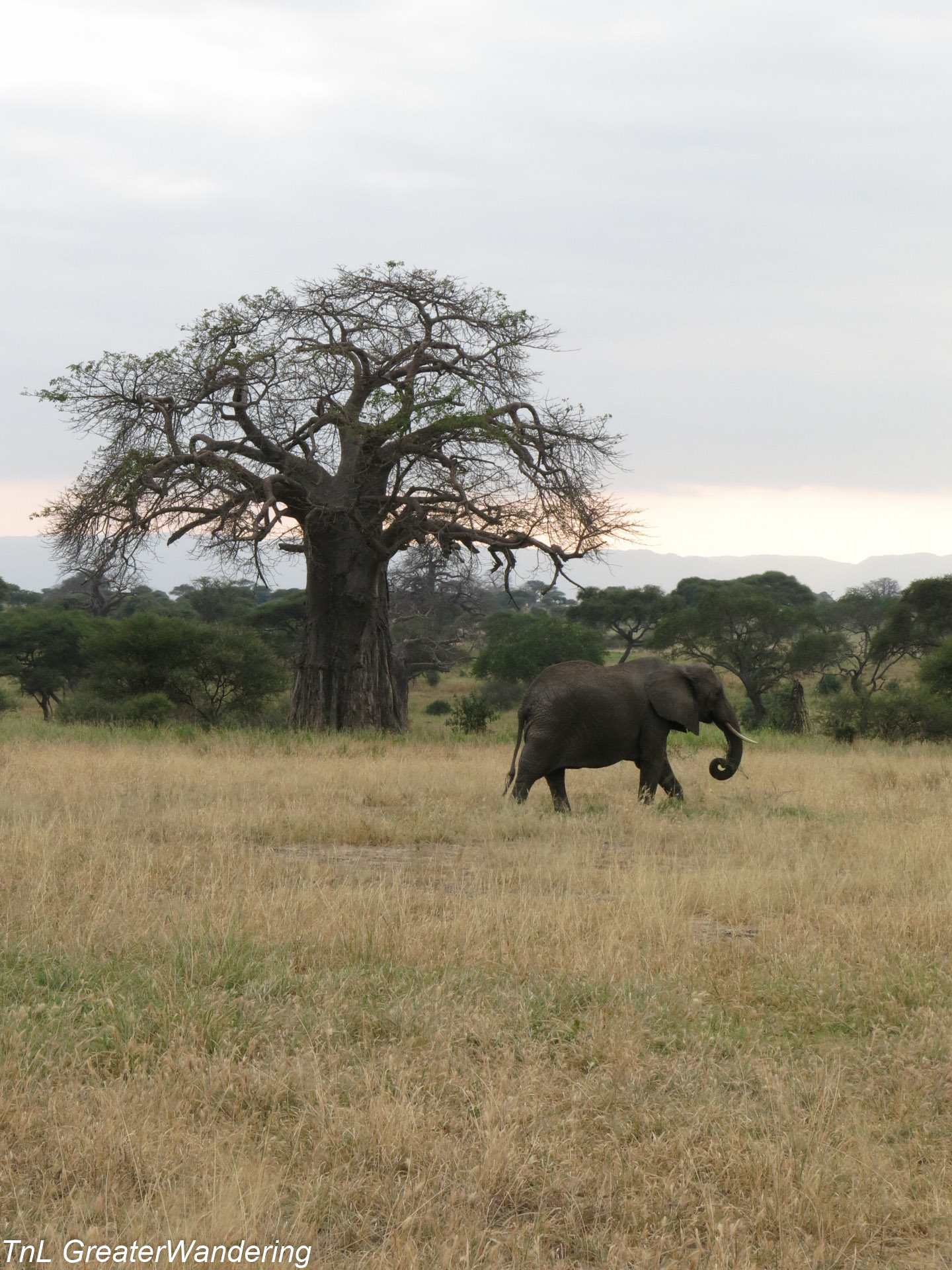
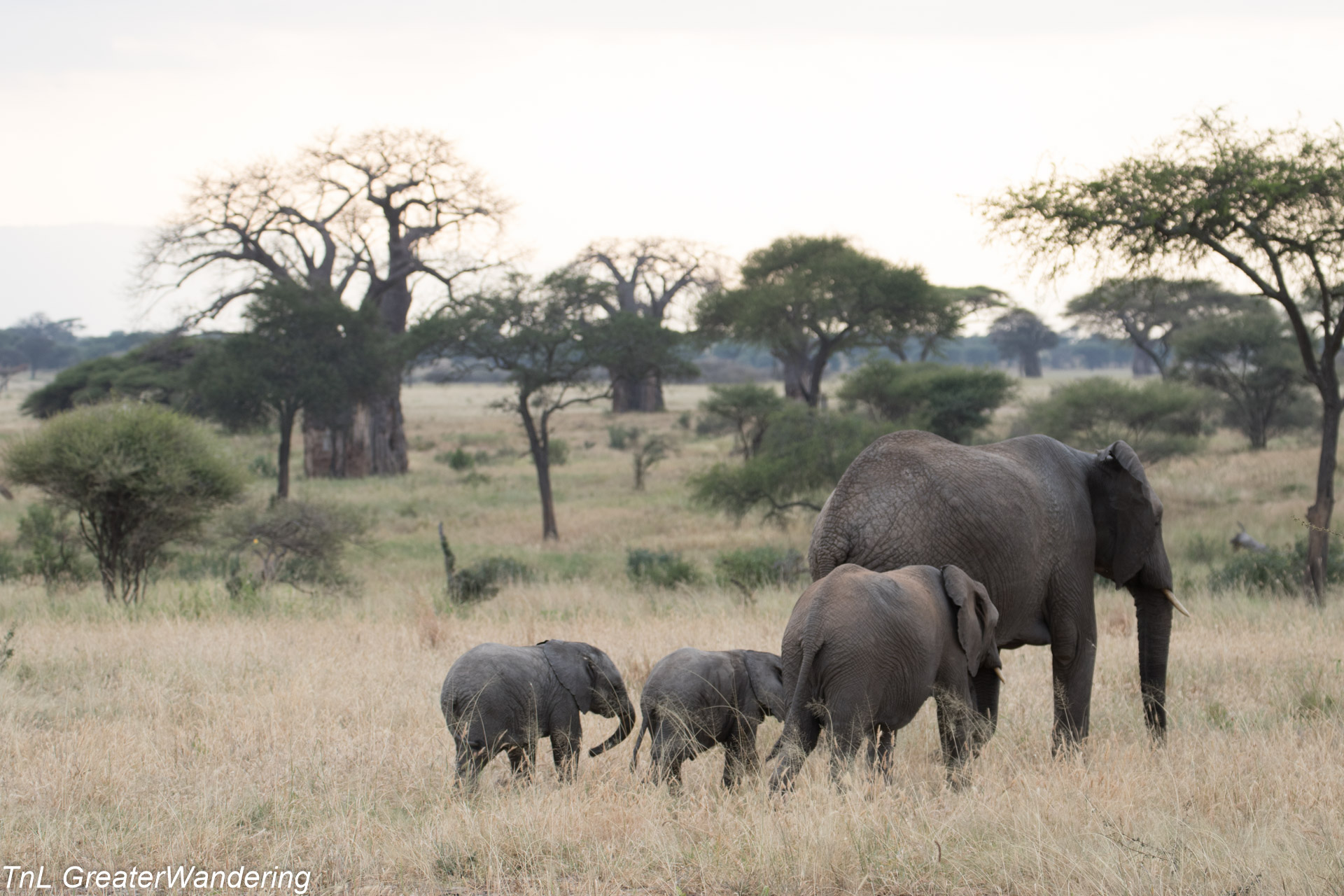
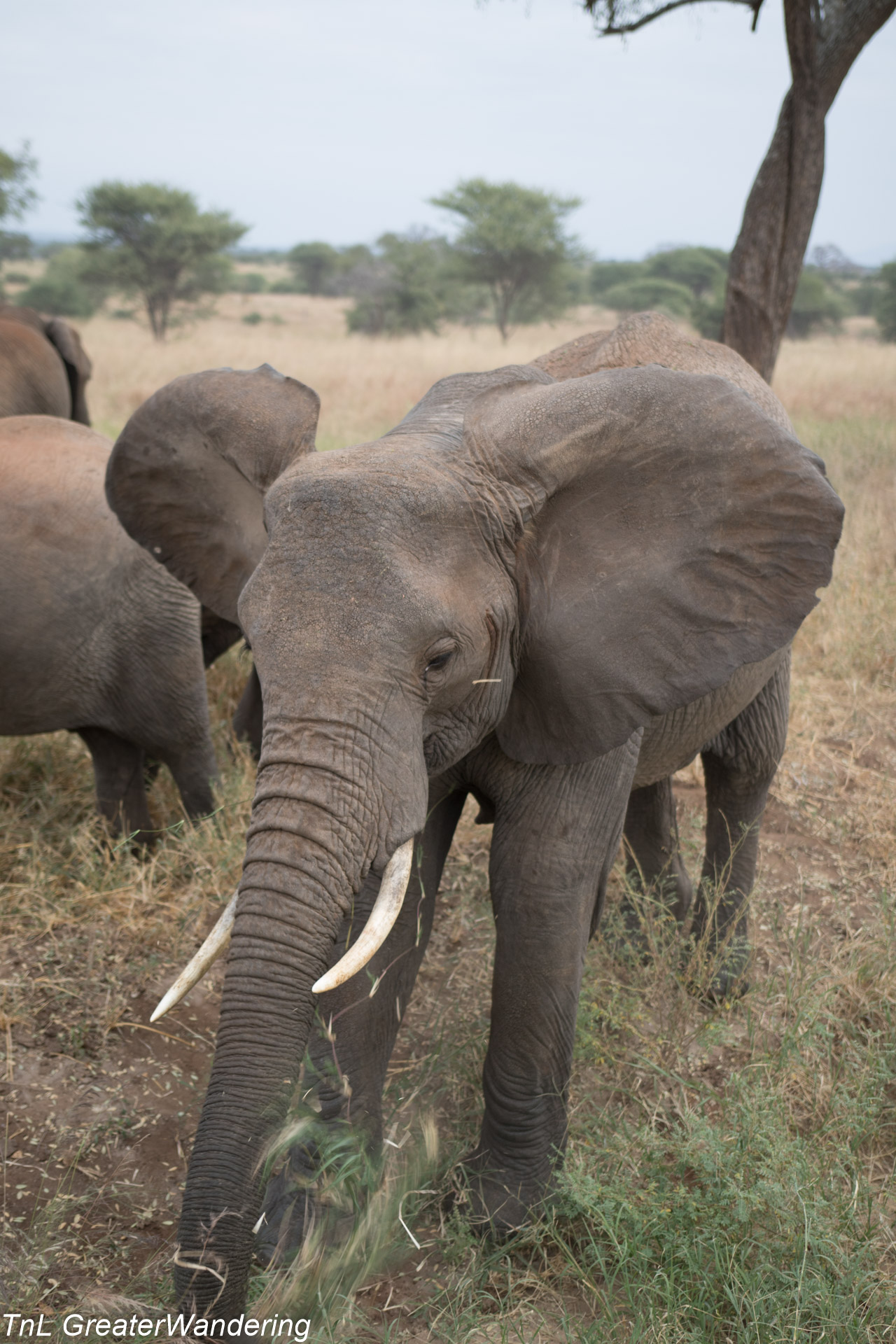
At the end of the safari we had a mad dash back through the park, Michael, our driver, was on a mission like no other to make it back to Maramboi tented camp, and especially to see the sunset from a great place… The sunset, an interesting plan really. Given that we’d had such a full on day seeing what we, non-Africans, considered amazing, seeing the old friend the sun drifting off the flat edge of the world just didn’t seem like something we’d need to rush for. So brushing past a couple of elephants and charging out of the park, albeit with a short stop to look for dad’s lost GPS was our last parting memory of Tarangire.  Once we were out of the park we were back onto good bitumen. This was a bit unnerving, was it actually a giant theme park rather than a rough adventure. No need to dwell on this too much as the former is just the reality.

Maramboi camp is about 20 minutes from from Tarangire National Park. This makes it a really painless drive and it’s certainly something to be happy about because you’re fairly buggered after watching things for the day while being bumped around inside the back of a landcruiser (even thoughts it’s padded). So after the sunset we unloaded ourselves from the car and went into Maramboi which is a fantastic camp for the price we paid (not that that’s cheap but…. compared to the other places on the trip). Maramboi is set on the side of Lake Manyara and has a wonderful view from the deck across (what was a little dry) lake and foreshore. While having your complimentary gin (or whatever it is) and tonic with a little lemon and some popcorn you can watch the wildebeest frolicking in the distance or a couple of crown cranes pecking their way through a few bushes. However that’s where our fun started with ‘It Started in Africa’ with our first reservation turning out to be incorrectly booked, so instead of a booking for two couples we had a booking for one couple. They suggested maybe we could have one couple stay somewhere else and the other stay at Maramboi, our driver had also disappeared at that point so we were left stranded waiting to find out whether in fact at 8pm we’d be shipped off to a new place to stay instead of where we planned. We were pretty shocked to be honest, the trip wasn’t cheap and failing to call ahead and make sure the bookings were correct was really all the tour company had to do. I don’t really blame Maramboi, this wasn’t really their problem whether they chose to solve it or not. Thankfully, however, Maramboi came through with the goods, our driver Michael nowhere to be seen, and let us stay in a room which was not really ready for guests but they managed to organise it. That was good, at least we had a place and we were together, we had to push the bad thoughts away and begin again. When we headed out to get our bags Michael appeared again, maybe he didn’t want to be involved in the issue, we have no idea but it wasn’t re-assuring. They then put our parents into their room and we were allocated ours.

The rooms were really very nice, hardwood floors elevated, good mosquito nets, reticulated showers and a lovely deck. A lovely place to smoke outside if you wished and ponder the meaning of all things. There was even some power points to charge your laptops/ cameras which would be the last time we’d have that kind of facility in a room until we gazed upon lake Victoria.

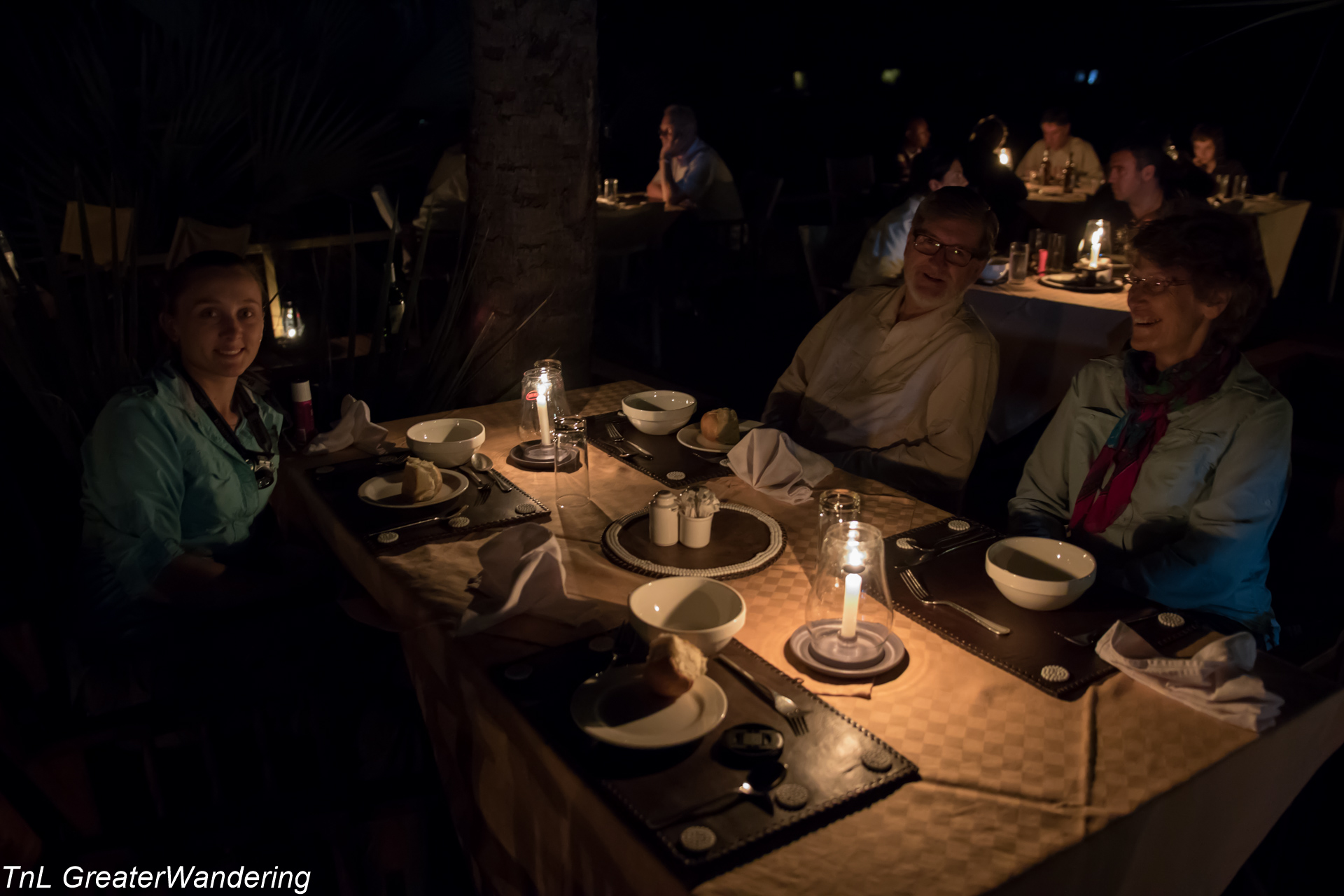
Dinner at Maramboi consisted of a buffet selection of hot food and some cold foods and cheese, just be careful of the cheese, it’s well aged. We also ordered a bottle of red wine, which I wouldn’t recommend anywhere in Africa, maybe we’re spoilt for choice in Australia, but no matter what we tried in Africa it was always average.

As morning came we were pleasantly surprised that breakfast was for the four of us, not just two, which was a bit of a surprise after the previous night. Again this is lovely out on the deck.

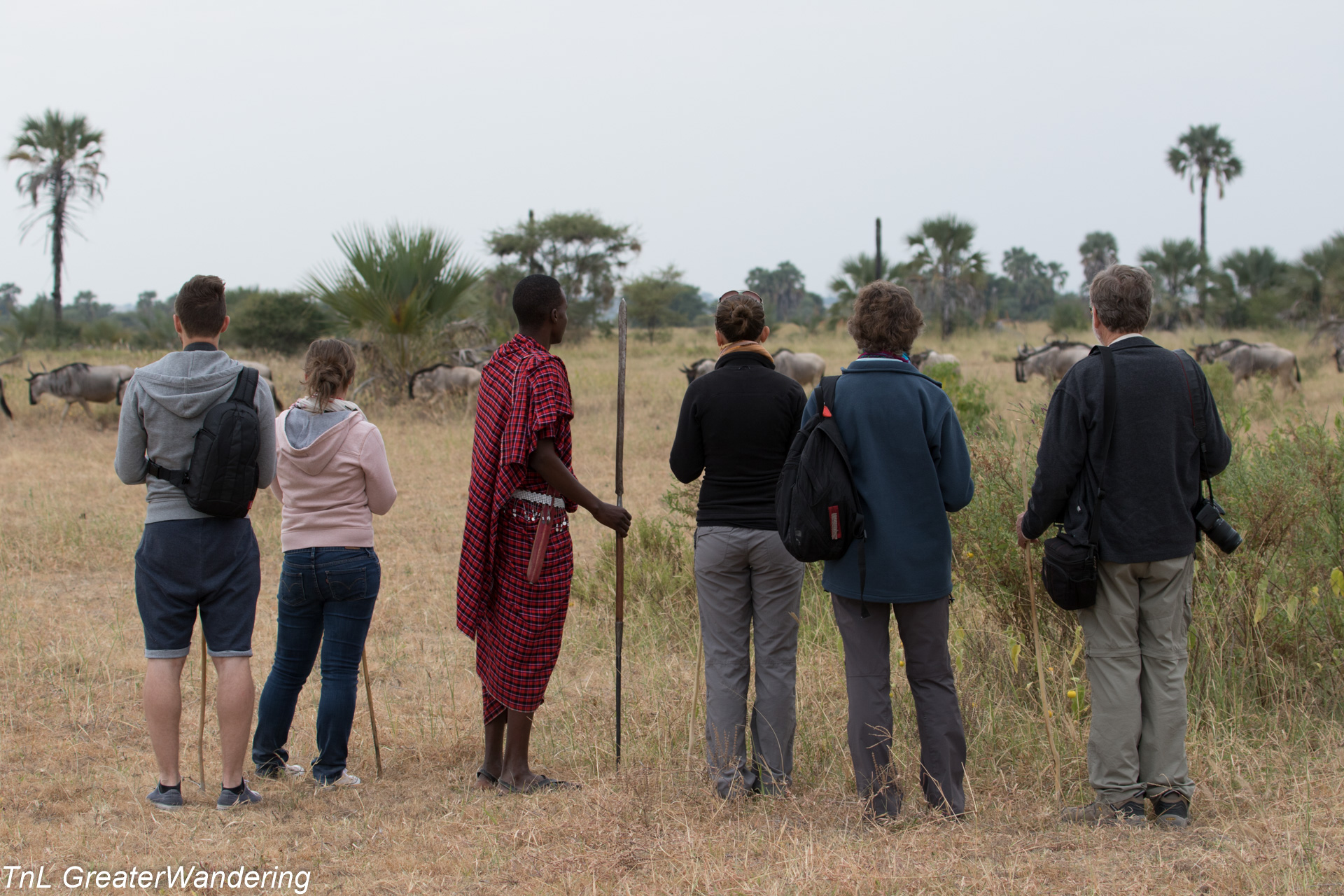
As we had a little time to spare before we travelled to Ngorongoro crater we decided to head out for a walk with a real Masai, unlike the fake ones… Either way it was quite a nice experience to go out for a walk in the morning and see a few antelope in the distance, look at a badger hole (no badger though), marabu storks and some flamingos in the distance. We were also told about the various uses for burning zebra poo to cure headaches and the ultimate headache curing poo is apparently elephant. It’s also a great chance to get a photograph with someone in Masai dress without being accused of being a muzungu and asked for money (one of our least favourite aspects of Africa).

We then collected our belongings hopped in the car and headed for Ngorogoro crater.

To be continued…


Traditional Gallery for those that like looking at photos


For photos which are geo-tagged you can see their locations